Market: Oil & Gas

DFTO – Direct Fired Thermal Oxidizer

DFTO – Direct Fired Thermal Oxidizer

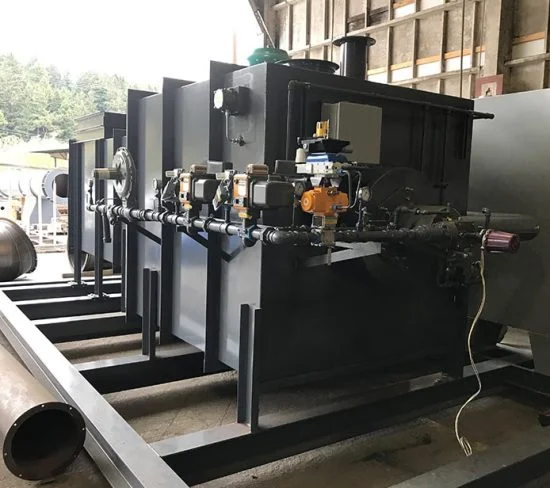
In addition to RETOX RTO Thermal Oxidizers for low LEL Solvent VOCs, Adwest provides DFTO-Direct Fired Thermal Oxidizer and DFCO-Direct Fired Catalytic Oxidizers for high and rich LEL process applications. Most Direct Fired DFTOs provide 1.0 seconds and greater retention time with turbulent flow and mixing for 99%+ VOC DRE efficiencies at 1400 degrees F and great oxidation Temperatures. (600-750 F for DFCO Oxidation with catalyst bed)

Adwest DFTO and DFCO Oxidizers are low profile, skid mounted design with most units pre-piped and wired, internally shop insulated with the control panel mounted on the DFTO and DFCO skid. Point source DFTOs start at 1,000 scfm and can be custom designed to over 60,000 scfm flow rates. The DFTO Thermal oxidizer Bruner System can utilize natural gas, propane, butane, biogas and even hydrogen as fuel sources. DFTOs typically provide fast cold startup times and are well suited for high VOC Streams on batch process applications.

DFTOs also provide excellent odor abatement for malodorous and high Btu processes with long chain aldehyde and hydrocarbon components. Both DFTO and DFCOs also provide a cost-effective backup to existing oxidizer systems on processes that need to operate 24/7/365 and have an emergency backup.
FEATURES & BENEFITS

  • 1.0 seconds and greater retention time with turbulent flow and mixing for 99%+ VOC DRE efficiencies
  • Utilize natural gas, propane, butane, biogas and even hydrogen as fuel sources
  • Provide excellent odor abatement for malodorous and high Btu processes with long chain aldehyde and hydrocarbon components
  • Cost-effective backup to existing oxidizer systems
CECO Environmental

APPLICATIONS

  • Chemical processing
  • Asphalt
  • Pharmaceuticals
  • Roasters
  • Food processing
  • Biogas
  • Landfill gas treatment
  • SVE-Spoil Vapor Extraction
  • Batch Reactors
  • Paint burn-off ovens
  • Aerospace
  • Composites
  • Coating Ovens
  • Fragrance & cosmetics manufacturing
Desanding Hydrocyclones

Desanding Hydrocyclones

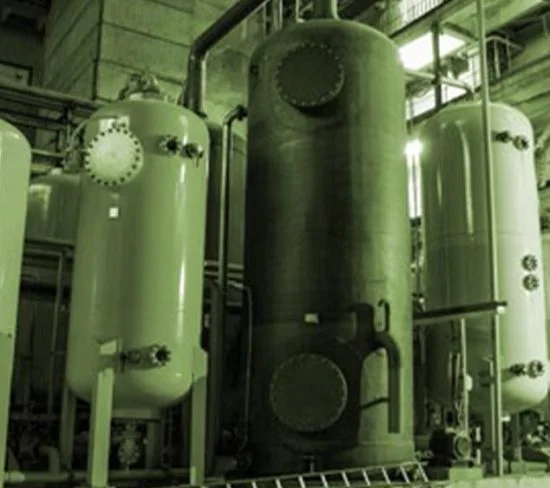
Desanding Hydrocyclones are pressure-driven cyclonic separators that utilize a certain pressure drop across the unit to force the separation of the solids from the bulk phase produced water or condensate. The feed stream, containing high amount of solids/ sand, enters the hydrocyclone through a tangential inlet under a pressurized condition. This is where it is forced into a spiral motion by the hydrocyclone’s internal profile. The internal conic shape of the liner causes the spinning/ swirling effect to accelerate {which effectively creates) high centrifugal forces, causing the denser solid particles to move to the outer wall of the hydrocyclone liner, while the lighter phase water or condensate is concentrated to the central core of the liner.

Solids continue to spiral down along the outer wall of the hydrocyclone to the bottom exit which is typically collected in an accumulator (could be integrated or a separate unit) for periodic disposal. The “desanded” water in the central core section reverses direction and is forced out through the central vortex towards the top of the Hydrocyclone.

Hydrocyclones are effectively centrifugal separators that rely on the differential density between the solids particle and the water to allow separation.

The efficiency of the separation is governed by four main factors:

  • Solid Particle Size
  • Differential Density
  • Viscosity of the Bulk Fluid
  • Gravity (or Centrifugal Force)

FEATURES & BENEFITS

  • Compact design, replacing substantially larger equipment.
  • No moving parts and minimal maintenance
  • Ideal for use where space is minimal
  • Cyclonic liners are available in a range of alloys from Stainless steel, Alumina Ceramic, Polypropylene, Tungsten Carbide, Reaction Bonded Silicon Carbide
CECO Environmental

APPLICATIONS

  • Wellhead solids removal in multi-phase flow
  • Protection of equipment from blockage or erosion
  • Sand cleaning for overboard discharge
  • Polishing of water prior to re-injection

Desalter Dehydrator

Desalter Dehydrator

Dehydrator

Peerless Dehydrators are compact Electrostatic Coalescer Units which use a high voltage electrostatic field to coalesce smaller water droplets thus separating them from the Oil phase. Peerless Desalters have been working in the field for more than 20 years and are one of the most trusted technologies for Dehydration and Desalting. Depending on process requirements, Peerless can offer Dehydrator/Desalter units in various configurations including Two Grid or Three Grid Design with single or multiple power units.

The crude oil water emulsion enters the dehydrator unit from a Peerless proprietary designed Inlet Header which ensures even distribution of crude between the grids. The emulsion gets induced either below or between the grids depending upon the selected design to avoid any short circuiting and hassle-free operation of the unit. These grids are charged with high voltage power supply from Power Transformers which are specially designed transformers for this purpose.

High voltage excites water particles to collide and coalesce to form bigger droplets achieving a degree of separation which is much higher than Gravity Separators.

The separated oil is collected from the oil collection header at the top and water is collected from the bottom header.

Desalter

Desalting is an extension of the dehydration process where fresh water is mixed with crude using a mixing valve to create a diluted emulsion and reduce concentration of salt in the water phase. The crude mixed with water is introduced into the desalter vessel where the separation of water and oil also removes the salt which is dissolved in water. Based on the process requirements either Single Stage or Two Stage configuration can be offered.

In a Two Stage Desalter, fresh water is injected in the crude oil upstream of the second stage desalter. The water is mixed with crude oil using a specially designed mixing valve. The brine that leaves from the 2nd stage desalter bottom is pumped to the upstream of the 1st stage mixing valve Desalter. The brine leaving the 1st stage desalter process passes through the wash water heat exchanger where it loses heat to the incoming wash water from the source. The crude from 1st stage flows to 2nd stage desalter.

FEATURES & BENEFITS

Peerless offers Desalters/Dehydrators designed with state-of-the-art technologies to achieve the most stringent Performance Guarantee requirements in Crude Oil Processing Units or Refineries. These units can meet performance guarantees of 0.1 to 0.5 BS&W and salt Guarantees of down to 5-10 PTB (Pounds Per Thousand Barrel). These units are designed to process crudes ranging from Light Condensate to Heavy Opportunity Crudes.

CECO Environmental

APPLICATIONS

  • Offshore – Mobile Offshore Production units (MOPU)
  • Offshore – FPSO Topsides
  • Onshore – Oil and Gas Processing Facilities
  • Onshore – Early Production Facilities (EPF)
  • Refineries & Petrochemical

Deoiling Hydrocyclones

Deoiling Hydrocyclones

The horizontal deoiling hydrocyclone vessel with liners is designed to reduce the oil content of the incoming produced water prior to entering an optional degasser vessel. The horizontal arrangement allows easy access to the liners for inspection, installation, and replacement.

Liquid/liquid cyclones – On entering the cyclone tangentially, the fluid begins to spin. This creates a radial force that directs the heavier phase towards the edges of the cyclone and then out of the cyclone underflow owing to differential pressure. The less dense phase is concentrated in the centre of the cyclone before passing out of the cyclone overflow, again due to differential pressure.

Hydrocyclones are effectively centrifugal separators that rely on the differential density between the oil droplet and the water to allow separation. The efficiency of the separation is governed by five main factors:

  • Droplet/Particle Size
  • Differential Density
  • Viscosity of the Bulk Fluid
  • Gravity (or Centrifugal Force)
  • Distance

The reject from the hydrocyclone comes out in a counter current flow as a reverse spinning vortex. For an oil droplet to be removed it must make its way from the bulk fluid into the central core. The less distance the droplet must travel to get to this central core the higher the efficiency.

CECO Environmental

APPLICATIONS

Deoiler Hydrocyclones were developed for the offshore oil industry in the 1980s and rapidly became established as standard equipment used for recovery of oil from Produced Water streams in both onshore and offshore applications.

Demineralization by Ion Exchange Resin

Demineralization by Ion Exchange Resin

Demineralization (IOX) is based on chemical properties that form the ion exchange resins, synthetic origin polymeric roots. Those resins are supplied with active functional groups, bonded to the sources that can exchange their moving ions with ions having the same charge contained in the solutions when water pass the IOX bed.

The Dementalization process is a cyclic process, thus, regeneration using acid & caustic soda is required at a specific frequency based on the ionic load, ion exchange quantity and flow rate. The standard system consists of Pretreatment to ensure feed water TSS is less than < 5 ppm, with a wide range of feed water conductivity up to 1,000 μm, two mono beds (SAC & SBA) followed by a mixed bed. Based on the feed water quality, a degasifier might be considered between the mono bids to reduce carbon dioxide load.

FEATURES & BENEFITS

  • Cost-effective operation and maintenance with an ionic load less than 500 μm
  • Low power consumption
  • Reliability & Robust
  • Provides complete removal of dissolved inorganic particles
  • Handle a wide range of raw water sources & quality
CECO Environmental

APPLICATIONS

  • Steam generation for petrochemical, chemical
  • Oil & gas industries
  • Injection water for pharmaceutical and autoclave steam disinfection
  • Steam generation for combined cycle power plants and thermal power plants
  • Food and beverage specialty and the wine industries
  • Semi-conductor industries

Demineralization by Electro Deionization

Demineralization by Electro Deionization

The electro-deionization (EDI) process mainly produces (demineralized) high-purified water required for different industries, combining semi-impermeable membrane technology with ion-exchange media. The electrical current is used to continuously regenerate the resin, eliminating the need for using harsh chemicals required for the regeneration of ion exchange resin. The EDI technology used to produce high-purified water (< 0.01 µm) mainly for the following industries

CECO Environmental

APPLICATIONS

  • Steam generation for petrochemical, chemical, oil, and gas industries
  • Injection water for pharmaceutical and autoclave steam disinfection
  • Steam generation for combined cycle power plant, thermal power plants
  • Food and beverage specifically within the win industries
  • Semi-conductor industries

Custom-Designed VARI-LINE™ Vane Separator

Custom-Designed VARI-LINE™ Vane Separator

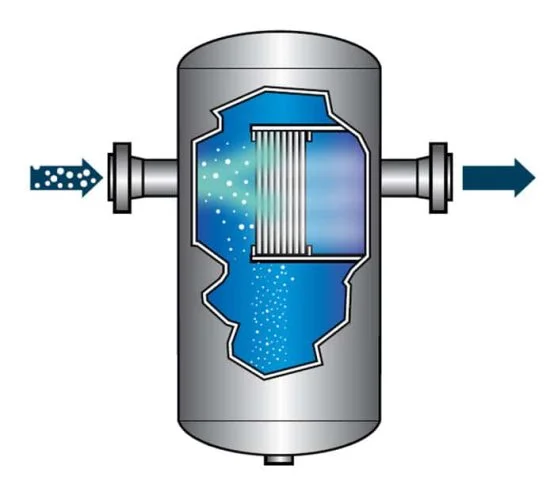
Vane separators use the principles of momentum, gravity, and coalescing to deliver high-efficiency, high-capacity, and low-cost gas and liquid separation with low pressure drop and high turndown. Vane separators provide liquid removal with smaller vessels, which results in lower initial cost, space savings, and minimal maintenance requirements.

Peerless leads the field in the design and installation of superior separation and filtration equipment to global industries. Peerless proudly delivers top-of-the-line products to oil and gas production, gas pipeline transportation, and power generating companies worldwide. In its nearly 85-year history, Peerless filtration equipment has been crafted and re-crafted by our expert team of engineers.

From perception to placement, Peerless filtration technology is worry-free and delivers the superior craftsmanship our customers expect. The Custom-Designed VARI-LINE™ Vane Separator is designed for the removal of liquids where space is limited.  Our advanced technology separates gas and liquids using centrifugal force and gravity with unparalleled efficiency. Peerless products and solutions include separation technologies, gas transmission, oil treatment, unconventional oil recovery, gas treatment, produced water and oil- water treatment, sand management, and nuclear power separators.

When it comes to filtration, inferior equipment can leave you with contaminated product, higher operating costs, and increased downtime. Put your trust in Peerless for your filtration and separation needs, and you won’t need to worry. Trust the high-quality equipment that has been the gold standard for decades. Trust Peerless. We live up to our name.

FEATURES & BENEFITS

  • High-capacity vanes
  • ASME-code vessel designs that are built to your specifications
  • Designed with several nozzle configurations
  • Internal baffling permits nearly any combination of inlet and outlet connection locations
  • Low Total Cost of Ownership
  • Efficient removal of liquids from gas streams
  • Guaranteed to remove 100% of all liquid droplets 8 microns and larger
  • Ideal for limited space installations
  • Wide range of gas capacities and pressure ratings
  • Negligible pressure drop
CECO Environmental

APPLICATIONS

For applications where space is at a premium and piping limitations prevent the use of a Standard Line Vane Separator, the Peerless brand’s Custom-Designed VARI-LINE™ Vane Separators are used in:

  • Natural gas compression
  • Refineries
  • Power
  • Industrial steam
  • Industrial gas compression
  • Air separation
  • Petrochemical
  • Chemical Production (e.g., Methanol)
  • Liquefied Natural Gas (LNG) production
  • Plastic production
  • Fertilizer production

CT Series High Pressure/High Vacuum Dust Collector

CT Series High Pressure/High Vacuum Dust Collector

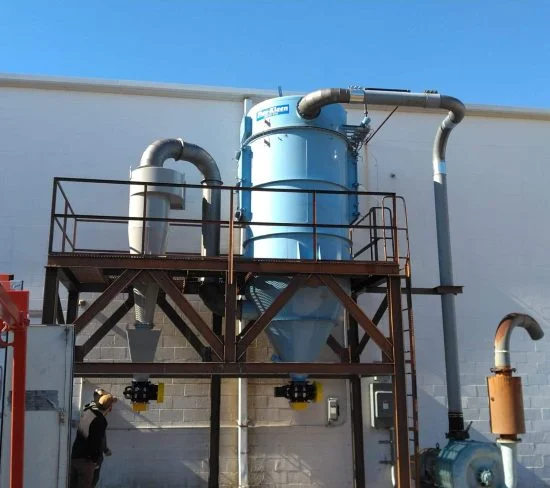
Flex-Kleen CT Series High Pressure/High Vacuum Dust Collecting Systems are designed to operate in process system environments with minimal maintenance and personnel effort. Applying over six decades of experience and knowledge, we deliver highly efficient dust collector solutions designed for optimal performance, reliability and durability, while meeting the most stringent environmental compliance standards across the globe.

Each dust collecting system is manufactured to fit your application specific requirements, with premium quality construction materials including stainless steel, special alloy, FRP, and sanitary construction for ASME (American Society of Mechanical Engineers) code pressure vessel service.

Flex-Kleen is a world leader in technologies that help companies with emission control. International companies use Flex-Kleen technology to manage emissions by controlling dust and recover valuable particulates that would otherwise be lost, with innovative hardware like the CT Series high pressure/high vacuum dust collection system. Our passion drives our success. Crafting advanced and reliable air control technology for our customers is what we pour our hearts and minds into, and it shows. Let Flex-Kleen help you develop the solution to your problem, as we have since 1959.

Because they trust our engineering and manufacturing processes to fill their needs, Flex-Kleen products are found in some of the world’s cutting-edge companies. Our people build products to help your business thrive. We work with you from conception to completion because they are as dependable as our products. We can provide installation and maintenance of your dust collection solution to let you focus on hitting your targets for peak production and maximum profitability. Let Flex-Kleen become a partner in your company’s success.

FEATURES & BENEFITS

  • Low Total Cost of Ownership
  • High-efficiency performance
  • Easy installation with pre-assembled units
  • High-quality and reliable models designed to satisfy USDA (U.S. Department of Agriculture) standards
  • Time and cost savings with minimal and easy maintenance and no internal moving part
  • 40″ to 100″ W.G. or 17″ Hg (pressure or vacuum)
  • Individual units to 40,000 cfm, multiple units available
  • Easy bag replacement
  • Easy installation
  • Minimum maintenance
  • Simple control
  • Inlet baffle to protect bags from abrasive dusts
  • Dusty air inlet and clean air outlet easily oriented to meet user requirements
  • Quick access door(s) to dusty and clean sides of the collector on negative pressure units
  • Bolted door(s) to dusty and clean sides of the collector for positive pressure units
  • External compressed air reservoir (shipped complete, with pre-wired solenoid valves, ready to mount)
  • A wide variety of bag materials to suit specific needs
  • Flush tube sheet in the clean air plenum
  • Solid-state adjustable sequencing timer in standard dust-tight housing
  • Saddle supports located to match user’s support steel

Corrugated Plate Interceptors (CPI), Concrete Basin Type (Skim-CKS)

Corrugated Plate Interceptors (CPI), Concrete Basin Type (Skim-CKS)

The oily water enters the corrugated plate interceptor via a specially designed slotted cross pipe that distributes the flow over the width of the separator basin. Due to the sudden decrease of flow velocity, a certain number of solids that may be contained in the liquid will settle in the inlet compartment. Depending on the solid’s concentration, a sludge suction device may be included in the design for intermittent removal of accumulated solids.

The oily water continues its way towards the plate packs wall and enters the plate pack from the top on a counter-flow direction. In the laminar flow in each channel (i.e., the distance between two subsequent plates), the minute oil droplets rise by their density is lower than that of the carrier medium and attach themselves to the underside of the upper plate.

The build-up oily layer that is thus constantly being formed at the underside of each plate creeps slowly upwards. The oil film is assisted in its upward movement by the counter-current laminar flow.

At the top of each plate the oil film is concentrated (coalesced) by the plates and leaves the plate at the ‘highest point’ as a thick stream or rising chain of large globules.

The treated water flows through the overflow baffle between the plates towards the outlet; thus, there is no interference between the separated oil and the clean water. The separated oil collects as a layer on top of the liquid surface and can be removed intermittently via the adjustable oil skimmer.

FEATURES & BENEFITS

All Skim-CKS Separator internals are of robust construction designed for many years of maintenance free operation. Depending on the properties of the liquid to be treated the material of the inclined plate packs can be:

  • Glass fibre reinforced polyester (GRP)
  • Coated carbon steel
  • Various grades of Austenitic Steel (SS304, SS316, DSS, SDSS)
  • Teflon-coated steel

Depending on the concentration of suspended solids, or oil, the plate spacing can be varied to suit the specific process conditions. Thus, we can offer to our clients the technically optimized solution for each individual application.

CECO Environmental

APPLICATIONS

The Corrugated Plate Interceptors in Concrete Basin (Skim-CKS) design is for below ground installation, applicable to a wide variety of treatment problems at atmospheric pressure:

  • Produced water
  • Drains water
  • Deballast water
  • Oily surface drain water
  • Refinery effluent
  • Process water/Desalter effluent

Compact Flotation Unit

Compact Flotation Unit

Compact Flotation Systems are used to remove oil and solids from produced water to ensure that it is safe for disposal and re-use. Based on design flow rate and footprint available, Peerless can offer Vertical Compact Flotation Units as secondary treatment systems.

Technology Description

The Peerless Compact Flotation Unit (CFU) is the latest generation compact flotation unit available on the market. The philosophy of compact flotation is the combination of multiple separation technologies including cyclonic and flotation principles. Peerless Compact Flotation Units are available as a single or two stage system, combined or separate oil/gas outlets, the CFU is adaptable to the wide variety of oil industry process conditions and applications.

FEATURES & BENEFITS

  • Can be either single or multiple stage separation
  • Removal of free oil-in-water to less than 20ppm
  • Unlimited Turn-down
  • Minimal requirement of chemicals
CECO Environmental

APPLICATIONS

Waste / Produced / Oily / Process Water Treatment for the following industries:

  • Onshore – Oil and Gas Processing Facilities
  • Onshore – Early Production Facilities (EPF)
  • Offshore – Mobile Offshore Production units
  • Offshore – FPSO Topsides
  • Refineries & Petrochemical