Brand: Peerless Separation & Filtration

Desalter Dehydrator

Desalter Dehydrator

Dehydrator

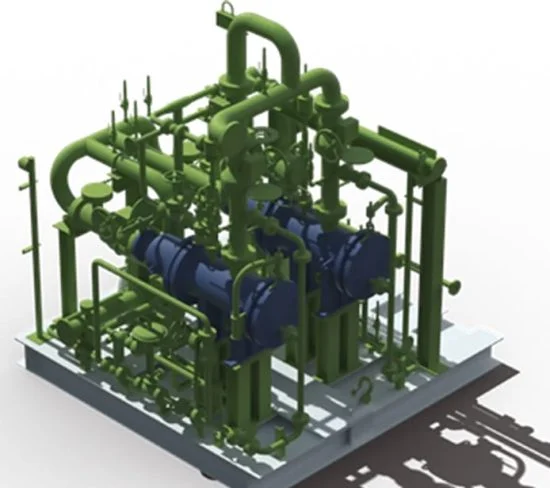
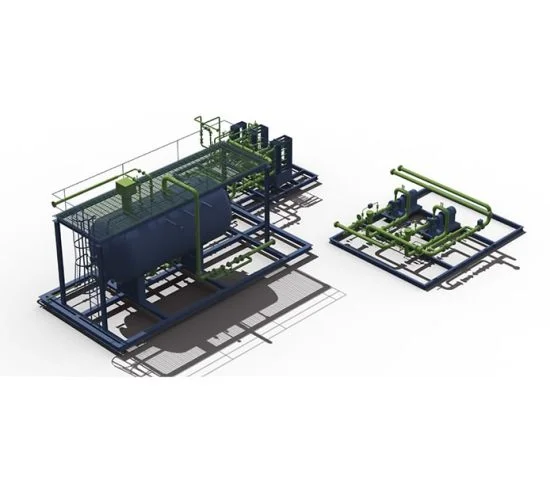
Peerless Dehydrators are compact Electrostatic Coalescer Units which use a high voltage electrostatic field to coalesce smaller water droplets thus separating them from the Oil phase. Peerless Desalters have been working in the field for more than 20 years and are one of the most trusted technologies for Dehydration and Desalting. Depending on process requirements, Peerless can offer Dehydrator/Desalter units in various configurations including Two Grid or Three Grid Design with single or multiple power units.

The crude oil water emulsion enters the dehydrator unit from a Peerless proprietary designed Inlet Header which ensures even distribution of crude between the grids. The emulsion gets induced either below or between the grids depending upon the selected design to avoid any short circuiting and hassle-free operation of the unit. These grids are charged with high voltage power supply from Power Transformers which are specially designed transformers for this purpose.

High voltage excites water particles to collide and coalesce to form bigger droplets achieving a degree of separation which is much higher than Gravity Separators.

The separated oil is collected from the oil collection header at the top and water is collected from the bottom header.

Desalter

Desalting is an extension of the dehydration process where fresh water is mixed with crude using a mixing valve to create a diluted emulsion and reduce concentration of salt in the water phase. The crude mixed with water is introduced into the desalter vessel where the separation of water and oil also removes the salt which is dissolved in water. Based on the process requirements either Single Stage or Two Stage configuration can be offered.

In a Two Stage Desalter, fresh water is injected in the crude oil upstream of the second stage desalter. The water is mixed with crude oil using a specially designed mixing valve. The brine that leaves from the 2nd stage desalter bottom is pumped to the upstream of the 1st stage mixing valve Desalter. The brine leaving the 1st stage desalter process passes through the wash water heat exchanger where it loses heat to the incoming wash water from the source. The crude from 1st stage flows to 2nd stage desalter.

FEATURES & BENEFITS

Peerless offers Desalters/Dehydrators designed with state-of-the-art technologies to achieve the most stringent Performance Guarantee requirements in Crude Oil Processing Units or Refineries. These units can meet performance guarantees of 0.1 to 0.5 BS&W and salt Guarantees of down to 5-10 PTB (Pounds Per Thousand Barrel). These units are designed to process crudes ranging from Light Condensate to Heavy Opportunity Crudes.
CECO Environmental

APPLICATIONS

  • Offshore – Mobile Offshore Production units (MOPU)
  • Offshore – FPSO Topsides
  • Onshore – Oil and Gas Processing Facilities
  • Onshore – Early Production Facilities (EPF)
  • Refineries & Petrochemical

Deoiling Hydrocyclones

Deoiling Hydrocyclones

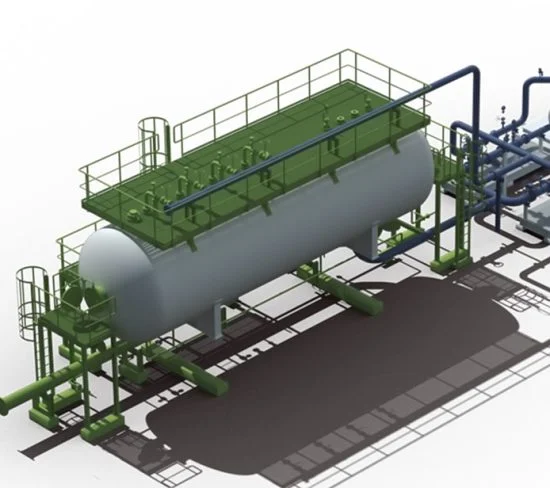
The horizontal deoiling hydrocyclone vessel with liners is designed to reduce the oil content of the incoming produced water prior to entering an optional degasser vessel. The horizontal arrangement allows easy access to the liners for inspection, installation, and replacement.

Liquid/liquid cyclones – On entering the cyclone tangentially, the fluid begins to spin. This creates a radial force that directs the heavier phase towards the edges of the cyclone and then out of the cyclone underflow owing to differential pressure. The less dense phase is concentrated in the centre of the cyclone before passing out of the cyclone overflow, again due to differential pressure.

Hydrocyclones are effectively centrifugal separators that rely on the differential density between the oil droplet and the water to allow separation. The efficiency of the separation is governed by five main factors:

  • Droplet/Particle Size
  • Differential Density
  • Viscosity of the Bulk Fluid
  • Gravity (or Centrifugal Force)
  • Distance

The reject from the hydrocyclone comes out in a counter current flow as a reverse spinning vortex. For an oil droplet to be removed it must make its way from the bulk fluid into the central core. The less distance the droplet must travel to get to this central core the higher the efficiency.

CECO Environmental

APPLICATIONS

Deoiler Hydrocyclones were developed for the offshore oil industry in the 1980s and rapidly became established as standard equipment used for recovery of oil from Produced Water streams in both onshore and offshore applications.

Custom-Designed VARI-LINE™ Vane Separator

Custom-Designed VARI-LINE™ Vane Separator

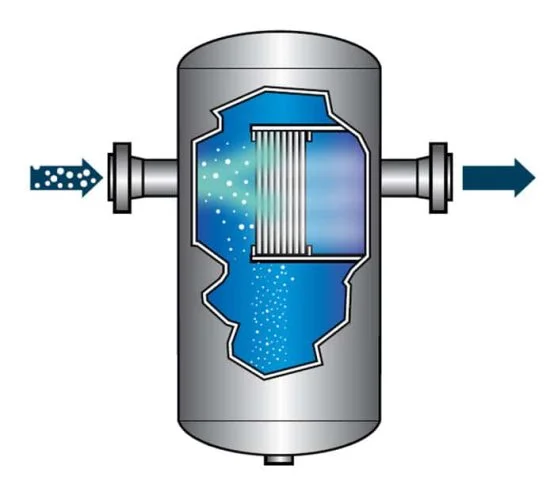
Vane separators use the principles of momentum, gravity, and coalescing to deliver high-efficiency, high-capacity, and low-cost gas and liquid separation with low pressure drop and high turndown. Vane separators provide liquid removal with smaller vessels, which results in lower initial cost, space savings, and minimal maintenance requirements.

Peerless leads the field in the design and installation of superior separation and filtration equipment to global industries. Peerless proudly delivers top-of-the-line products to oil and gas production, gas pipeline transportation, and power generating companies worldwide. In its nearly 85-year history, Peerless filtration equipment has been crafted and re-crafted by our expert team of engineers.

From perception to placement, Peerless filtration technology is worry-free and delivers the superior craftsmanship our customers expect. The Custom-Designed VARI-LINE™ Vane Separator is designed for the removal of liquids where space is limited.  Our advanced technology separates gas and liquids using centrifugal force and gravity with unparalleled efficiency. Peerless products and solutions include separation technologies, gas transmission, oil treatment, unconventional oil recovery, gas treatment, produced water and oil- water treatment, sand management, and nuclear power separators.

When it comes to filtration, inferior equipment can leave you with contaminated product, higher operating costs, and increased downtime. Put your trust in Peerless for your filtration and separation needs, and you won’t need to worry. Trust the high-quality equipment that has been the gold standard for decades. Trust Peerless. We live up to our name.

FEATURES & BENEFITS

  • High-capacity vanes
  • ASME-code vessel designs that are built to your specifications
  • Designed with several nozzle configurations
  • Internal baffling permits nearly any combination of inlet and outlet connection locations
  • Low Total Cost of Ownership
  • Efficient removal of liquids from gas streams
  • Guaranteed to remove 100% of all liquid droplets 8 microns and larger
  • Ideal for limited space installations
  • Wide range of gas capacities and pressure ratings
  • Negligible pressure drop
CECO Environmental

APPLICATIONS

For applications where space is at a premium and piping limitations prevent the use of a Standard Line Vane Separator, the Peerless brand’s Custom-Designed VARI-LINE™ Vane Separators are used in:

  • Natural gas compression
  • Refineries
  • Power
  • Industrial steam
  • Industrial gas compression
  • Air separation
  • Petrochemical
  • Chemical Production (e.g., Methanol)
  • Liquefied Natural Gas (LNG) production
  • Plastic production
  • Fertilizer production

Corrugated Plate Interceptors (CPI), Concrete Basin Type (Skim-CKS)

Corrugated Plate Interceptors (CPI), Concrete Basin Type (Skim-CKS)

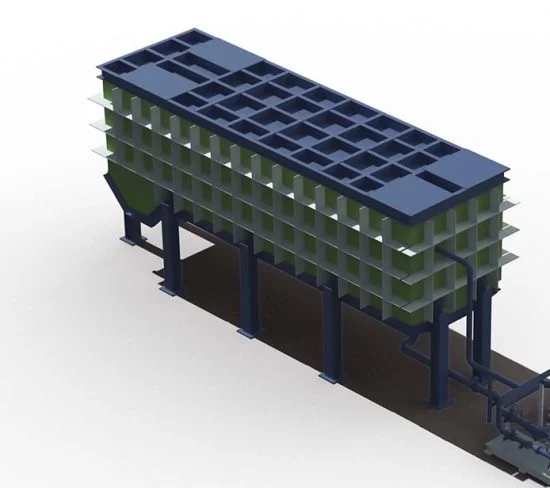
The oily water enters the corrugated plate interceptor via a specially designed slotted cross pipe that distributes the flow over the width of the separator basin. Due to the sudden decrease of flow velocity, a certain number of solids that may be contained in the liquid will settle in the inlet compartment. Depending on the solid’s concentration, a sludge suction device may be included in the design for intermittent removal of accumulated solids.

The oily water continues its way towards the plate packs wall and enters the plate pack from the top on a counter-flow direction. In the laminar flow in each channel (i.e., the distance between two subsequent plates), the minute oil droplets rise by their density is lower than that of the carrier medium and attach themselves to the underside of the upper plate.

The build-up oily layer that is thus constantly being formed at the underside of each plate creeps slowly upwards. The oil film is assisted in its upward movement by the counter-current laminar flow.

At the top of each plate the oil film is concentrated (coalesced) by the plates and leaves the plate at the ‘highest point’ as a thick stream or rising chain of large globules.

The treated water flows through the overflow baffle between the plates towards the outlet; thus, there is no interference between the separated oil and the clean water. The separated oil collects as a layer on top of the liquid surface and can be removed intermittently via the adjustable oil skimmer.

FEATURES & BENEFITS

All Skim-CKS Separator internals are of robust construction designed for many years of maintenance free operation. Depending on the properties of the liquid to be treated the material of the inclined plate packs can be:

  • Glass fibre reinforced polyester (GRP)
  • Coated carbon steel
  • Various grades of Austenitic Steel (SS304, SS316, DSS, SDSS)
  • Teflon-coated steel

Depending on the concentration of suspended solids, or oil, the plate spacing can be varied to suit the specific process conditions. Thus, we can offer to our clients the technically optimized solution for each individual application.

CECO Environmental

APPLICATIONS

The Corrugated Plate Interceptors in Concrete Basin (Skim-CKS) design is for below ground installation, applicable to a wide variety of treatment problems at atmospheric pressure:

  • Produced water
  • Drains water
  • Deballast water
  • Oily surface drain water
  • Refinery effluent
  • Process water/Desalter effluent

Compact Flotation Unit

Compact Flotation Unit

Compact Flotation Systems are used to remove oil and solids from produced water to ensure that it is safe for disposal and re-use. Based on design flow rate and footprint available, Peerless can offer Vertical Compact Flotation Units as secondary treatment systems.

Technology Description

The Peerless Compact Flotation Unit (CFU) is the latest generation compact flotation unit available on the market. The philosophy of compact flotation is the combination of multiple separation technologies including cyclonic and flotation principles. Peerless Compact Flotation Units are available as a single or two stage system, combined or separate oil/gas outlets, the CFU is adaptable to the wide variety of oil industry process conditions and applications.

FEATURES & BENEFITS

  • Can be either single or multiple stage separation
  • Removal of free oil-in-water to less than 20ppm
  • Unlimited Turn-down
  • Minimal requirement of chemicals
CECO Environmental

APPLICATIONS

Waste / Produced / Oily / Process Water Treatment for the following industries:

  • Onshore – Oil and Gas Processing Facilities
  • Onshore – Early Production Facilities (EPF)
  • Offshore – Mobile Offshore Production units
  • Offshore – FPSO Topsides
  • Refineries & Petrochemical

Combined CPI + DGF Unit (CompacSep)

Combined CPI + DGF Unit (CompacSep)

Advanced Oil-Water Separator “CompacSep” is a next generation Oily Water Separation product which offers technological advantage of Corrugated Plate Interceptor and Flotation technology combined in single vessel or tank. This is used to remove oil and solids from produced water to ensure that it is safe for disposal and re-use.

Process Description

  1. Corrugated Plate Interceptor Section

Oily water enters the unit from the top of the vessel through an inlet device. The coalescence section is provided with plate packs which ensure effective separation of all three phases from each other. The plate pack offered by Peerless is the counter- current plate pack technology which removes bulk oil from water in a much smaller footprint compared to other technologies.

An additional feature is that the plate packs will suppress any re-circulation and the motion of waves. In the counter-current design, the small oil droplets rise by virtue of the fact that their density is lower than that of the carrier medium and attach themselves to the underside of the upper plate. The oil film that is thus constantly being formed at the underside of each plate creeps slowly upwards along the plates. The oil film is assisted in its upward movement by the concurrent laminar flow.

At the top of the plates, the oil film is coalesced into a thick stream of oil that quickly rises to the upper part of the tank. The oil then forms a layer, which can be removed by the oil skimmer to an integral oil holding sump.

The water flows through an underflow weir to the treated water section and flows down to the flotation section. The light oil floats to top of the liquid layer and flows to bucket type skimmer provided on underflow weir. The recovered oil will flow to recovered oil chamber of IGF Section.

  1. Dissolved Gas Flotation Section

Water enters the unit through flotation section and flows down the length of the vessel through four flotation cells. Each flotation cell is separated from the next by an underflow baffle which is designed to maintain uniform flow through the flotation cell. The recycle stream is taken from treated water section of the flotation unit using microbubble-generating pumps and pumped back to through the whitewater (gas-containing water) distributors. Each flotation cell contains a set of manifold responsible to uniformly distribute the microbubbles.

The entrained gas bubbles have the effect of sticking to the oil droplets and bringing them to the liquid surface where they form an unstable foam/scum layer. The foam and oily water scum are removed using an overflow weir into an oily water collection compartment.

Water leaving the final flotation cell passes around the underflow/overflow weir to the Treated Water Section.

Because the flotation gas is recycled, no additional gas is required. A small gas bleed is often included to refresh the gas in the flotation unit during times of low flow.

FEATURES & BENEFITS

  • Removal of free oil-in-water to less than 10ppm
  • Removal of fine solids
  • Unlimited turndown
  • Micro Gas Bubble Flotation
CECO Environmental

APPLICATIONS

  • Onshore – Oil and Gas Processing Facilities
  • Onshore – Early Production Facilities (EPF)
  • Refineries & Petrochemicals

Basket Strainers

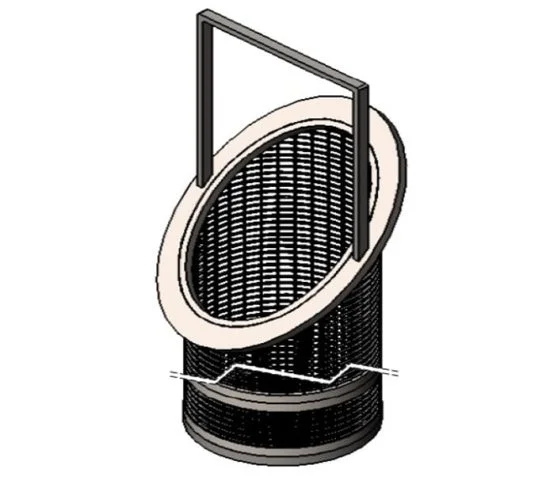
Coarse filtration is a type of physical filtration process where a contaminated fluid is passed through a special pore-sized strainer to remove suspended particles from process liquid. The particles removed depend on the strainer type, mesh or micron rating, and construction method.

Basket strainers are simple mechanical sieving devices inserted into vessels / housings to remove solid contaminants from a process liquid stream.

The baskets can be fabricated from several materials such as SS304, SS316, or even exotic materials such as Duplex Stainless Steel and Monel, based on compatibility with the fluid handled.

Basket strainers are available in a range of mesh and micron sizes, and construction styles like mesh and wedge wire screens.

FEATURES & BENEFITS

  • Supplied as part of an integrated system to achieve performance guarantee
  • Fast track delivery
  • Retrofit of existing strainer housings
  • Housing with special arrangement and fabrication standard (ASME)
  • Installation & Commissioning Supervision
  • Operation & Maintenance Service
  • Minimal footprint requirement
  • Low Cost of Ownership
  • Easy Installation
  • Low Maintenance
CECO Environmental

APPLICATIONS

  • Seawater, Fresh Water, Produced Water
  • Diesel
  • Utility and Service Water

Absorption Media Filters

Absorption Media Filters

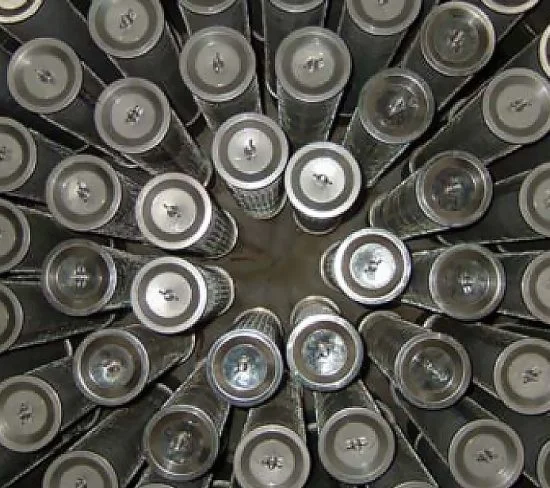
Our absorption media is designed for the removal of total hydrocarbons from water, including amongst many, Phenols, PAH and BTEX.

The media is a non-swelling organoclay granular media that removes hydrocarbons from water by means of chemisorption.

Absorption Media Filters are typically used downstream of a hydrocyclones, flotation unit, media filtration as a final stage polishing filter to ensure guaranteed oil in water outlet conditions are met. This can be for an upset condition where performance can deteriorate in upstream process equipment.

The media is supplied in a cartridge form for easy removal and replacement but can also be supplied in bulk beds for upflow and downflow operation.

The vessels can be linked up to oil in water analysers on a bypass line to only come into service when poor outlet quality of upstream processes are detected.

The media works by chemically absorbing hydrocarbons, and this is a bonding process, therefore no release can occur.

FEATURES & BENEFITS

  • Absorbs 50 to 100% of its own weight
  • Can absorb up to 10 times more than standard GAC Media
  • Non-swelling and can be in cartridge form
  • Media remains free flowing as filters do not become “blocked” even when fully saturated
  • Operating temperature of up to 90°C
  • Optimum operation between pH of 4–11
  • Ideal for offshore where quick cartridge replacement is required

Absolute Coalescing Separators

Absolute Coalescing Separators

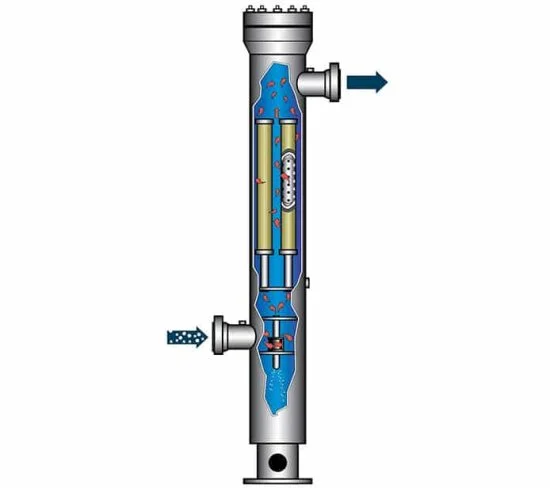
The Peerless brand Absolute Coalescing Separator is a single-or-multi-stage device that is designed for maximum separation efficiency of sub-micron liquid droplets in critical services. Small diameter cyclones or vanes remove liquid and solid particles by utilizing the dynamics of centrifugal force and gravity. By removing the bulk of the entrained liquid in this stage, we increase the time between changing the elements, thereby reducing operating costs and downtime. Trust Peerless Absolute Coalescing Separators for sensitive process conditioning to achieve ultra-high liquid removal efficiency, high reliability, and minimal pressure drop.

Peerless is a leader in the design and installation of efficient, high-quality separation and filtration equipment for industries worldwide. Peerless proudly delivers top-of-the-line equipment to oil and gas production, gas pipeline transportation, and power generating industries. Our filtration equipment has been crafted and re-crafted by our engineers over a nearly 85-year history.

From blueprint to installation, Peerless filtration technology is worry-free, providing the superior craftsmanship customers expect from our products. Our Absolute Coalescing Separators remove solids and liquid particles by using centrifugal force and gravity. We offer products and solutions for separation technologies, gas transmission, oil treatment, unconventional oil recovery, gas treatment, produced water and oil-water treatment, sand management, nuclear power separators and many other applications.

Your profit margin can be impacted by inferior filtration equipment in the form of product contamination, higher operating expenses, and increased maintenance. When you trust your filtration and separation needs to Peerless, you maximize your investment. Trust the brand that has created and installed high-quality equipment for decades. Trust Peerless. We live up to our name.

FEATURES & BENEFITS

  • Intrinsic 2-stage configuration
  • Flexible primary stage separator designs
  • A variety of coalescer media efficiencies
  • Built to ASME Code for international standards
  • Low Total Cost of Ownership
  • Guaranteed performance
  • Increased time between changing the elements reduces operating costs and downtime
  • Replacement of the coalescer elements can be accomplished in a minimum amount of time and effort through the use of a full diameter closure
  • Completely maintenance-free, self-cleaning and contain no replacement or moving parts to cause a shutdown
CECO Environmental

APPLICATIONS

  • Fertilizer Production
  • Natural Gas Compression
  • Refineries
  • Power
  • Industrial Steam
  • Industrial Gas Compression
  • Air Separation
  • Petrochemical
  • Chemical Production (e.g., Methanol)
  • Liquefied Natural Gas (LNG) Production
  • Plastic Production