Brand: Peerless Separation & Filtration

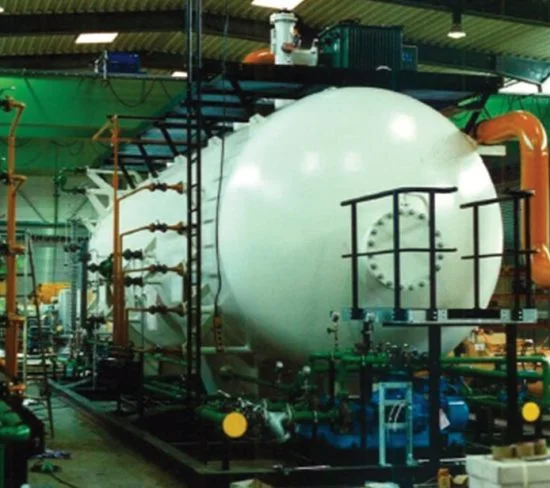
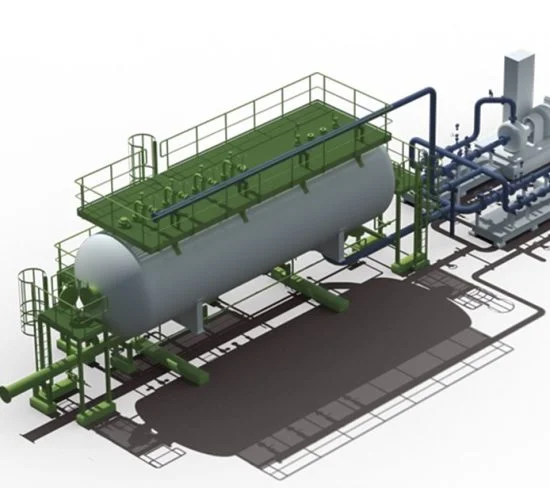
Fuel Gas Conditioning Skid

Fuel Gas Conditioning Skid

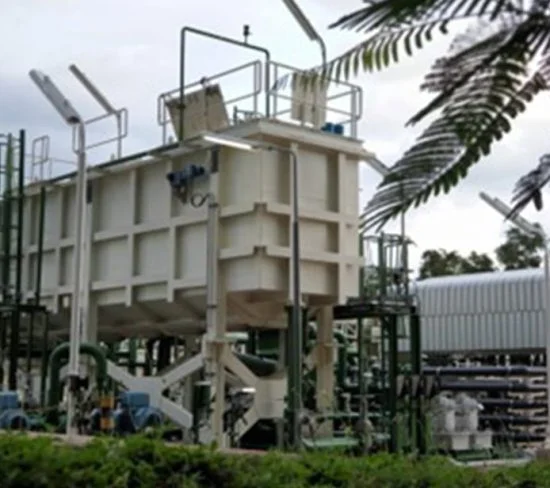
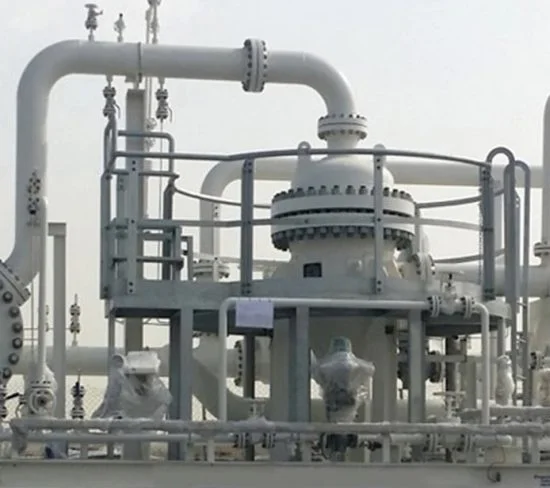
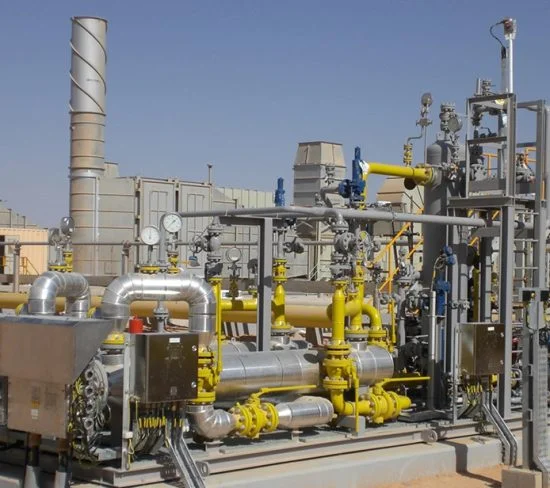
Fuel Gas Conditioning (FGC) system is primarily provided to treat fuel gas by removing any solids and liquid content and set the gas process conditions such as temperature and pressure to meet emission norms and improve the life of downstream equipment.

Process Description

If unconditioned process gas is sent directly to the gas engine turbines/generators/burners, it can damage their internal components. Hence, process gas, sourced from a slip-up stream of GDU or sales gas pipelines, requires pre-treatment prior to being used as fuel gas. Presence of even a minute quantity of liquid droplets or solids can severely damage the combustion engine of the turbines, resulting in failure of the equipment and voiding its warranty.

FEATURES & BENEFITS

The Fuel Gas Conditioning (FGC) unit typically consists of a pre-heater, pressure reduction manifold, FG Knock out drum (KOD), Gas Scrubber/Filter and Gas Superheater (Electric or Indirect Fired). Depending of the hydrate formation tendency, sometimes a pre-heater may be provided at the FG system inlet.

The pressure of the HC gas entering the FG system is reduced as per the user requirement. Due to this JT effect, the HC condensate and water formed are separated from the gas in the KOD. The gas is then taken to the Coalescers/Fine filter to further reduce the liquid and solid droplet size in the gas to <0.5µm. The gas is then heated, using a Superheater to elevate its temperature to above the HC dew point (typically 10–20ºC) and reduce any possibility of condensate formation in the pipeline leading to the gas turbine.
CECO Environmental

APPLICATIONS

  • Offshore – Process Platforms/Wellheads/ FPSO/ MOPUs/ Drilling rigs
  • Onshore – Oil & Gas Processing, Early Production, Well Testing, Refineries, Gas plants, Produced water treatment units
Filter Separators

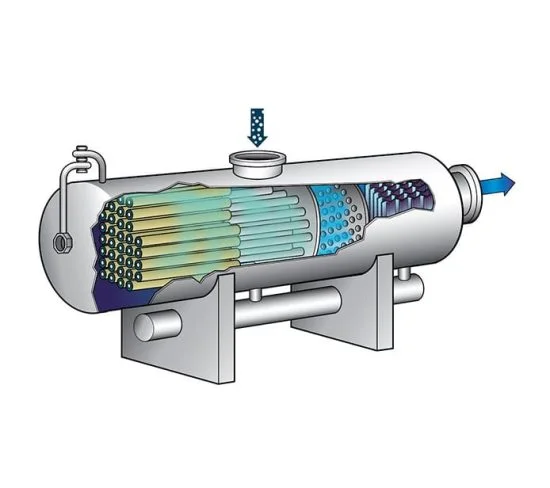
Filter separators are important for maintaining equipment integrity, enhancing process efficiency, and meeting regulatory standards.

The Peerless brand Filter-Separator system provides economical, effective, and highly efficient removal of large and small solid and liquid particles from gas streams to help protect valuable mechanical equipment and optimize the efficiency of processes. The Filter Separators combine a filter and liquid removal device in one high-performance vessel:

  • 36″ Filters capture solids and coalesce liquids
  • Vane packs strip away liquids for clean dry gas

Our filter separators are available in vertical or horizontal, and single- or double-barrel configurations. We deliver performance guaranteed solutions to fit your requirements, ensuring 99.5% or higher removal efficiency, optimal operational performance, and highly reliable systems.

Discover the power of our filter separators today.

FEATURES & BENEFITS

  • Flexible designs
  • Custom sized vessels and internals
  • State-of-the-art testing
  • Built to ASME code
  • Low Total Cost of Ownership
  • Guaranteed to remove 100% of all liquid droplets 8 microns and larger
  • High reliability

Ferrate-based Advanced Oxidation Process

Ferrate-based Advanced Oxidation Process

Ferrate (Supercharged Oxidant)

Ferrate (FeO4)2- is a supercharged form of iron with in the +6 oxidation state, also known as Iron (VI). Ferrate is extremely powerful to serve multiple treatments from a single application. It does not create toxic Disinfection By-Products thus, is environment-friendly, and solves a various range of treatment challenges than other standard oxidants. Most importantly, Ferrate is often the least expensive and most effective treatment option. Ferrate is a versatile oxidant is designed to move away from chlorine, as well as ozone, peroxides and ultraviolet light.

Ferrate-Based Advanced Oxidation

The process of mixing Hydrated Ferric solution (iron catalyst) and strong Acidic Halogen Oxidant solution (oxidizing agent) is the easiest method to produce pure Ferrate in the reaction tank. The purity of Ferrate is more than 99% in the mixed form. This Ferrate production scheme is an exclusive and proprietary process.

Ferrate (VI) from Hydrated Ferric solution & Acidic Halogen agent is the safest oxidant, inexpensive and “environmental friendly”, especially for water and waste water treatment applications. This Reduction-Oxidation process is an ideal treatment for industrial and municipal effluent containing hazardous organic and inorganic compounds. Using the high purity ferrate, there is no need to dose poisonous and corrosive gasses like chlorine, hypochlorite or ozone. These oxidants have deleterious side effects. Additionally, the handling of chlorine, hypochlorite, HOCl, chlorine dioxide or ozone are potential danger to workers due to their high toxicity. And a major disadvantage of chlorine and chlorine dioxide or any other chlorine- containing oxidant produce, chloramines, chlorinated aromatics, chlorinated amines or hydrocarbons. All these oxidants are potential mutagens or carcinogens, are for sure more toxic than the parent contaminants.

Both compositions in Hydrated Ferric catalyst and Acidic Halogen are oxidation products and 100% biodegradable. The ferrate molecule precipitates out of solution as Fe(OH)3 and now the adsorption process starts to collect cation as well as anions from the water. The iron containing product will be easily filtered out by Advanced Catalytic Media Filtration leaving iron-free water containing innocuous by-products.

FEATURES & BENEFITS

  • Ferrate is the most powerful common oxidant/ disinfectant for water and wastewater treatments
  • Multiple Treatment Capability
  • Low-Operating Cost
  • Safe & Non-toxic Reagents required
  • No Disinfection By-Products
  • Capable to treat Difficult Biosolids
  • Versatile Supercharge Iron which can perform as an Oxidant, Disinfectant & Coagulant
CECO Environmental

APPLICATIONS

  • Produced Water Treatment
  • Wastewater Treatment
  • Drainwater Treatment
  • High Organics Waste Treatment
  • Refineries & Petrochemical

Engineering Services

Engineering Services

CECO provides a range of Services and Solutions to owner-operators and EPCs in various segments of Oil & Gas, Energy and Electro-mechanical industries. With decades of experience and millions of hours of engineering excellence, we have qualified, experienced multi-discipline resources to execute projects from Concept to Commissioning. Our capability is strengthened by in-house infrastructure for design and fabrication of equipment and custom engineered packages.

Our multi-discipline skill set include:

  • Process Engineering
  • Mechanical Engineering
  • Piping Engineering
  • Civil Engineering
  • Structural Engineering
  • Electrical Engineering
  • Control Engineering
  • Project Management
  • Sourcing & Procurement
  • Specialized Engineering

We are well versed with International Codes & Standards such as ASME, ASTM, API, AISC, BS, BIS, NACE, N EMA, ANSI, DIN, etc., have the skill set of the latest tools and software.

SERVICES OFFERED

  • Feasibility Studies
  • Analysis & stimulations
  • FEED / Basic Engineering
  • Detail Design / Engineering
  • Integrated 3D Engineering
  • Project management
  • Brownfield Engineering / As-Built Engineering
  • Site / Engineering, Validations
  • O & M Support Service
  • Resource Augmentation

Electrostatic Coalescer

Electrostatic Coalescer

Peerless Desalters/Dehydrators are designed to meet the desired performance requirement in crude oil processing units or refineries. These units can meet performance guarantees of 0.1% to 0.5% BS&W and salt guarantee of 5 to 10 PTB. Depending on the process requirement, Peerless can offer Electrostatic Coalescer units in various configuration including two-grid or three-grid design, using single or multiple power units.

Peerless leads the industry in the design and installation of efficient, high-quality separation and filtration equipment.  We proudly deliver top-of-the-line equipment to industries around the globe. Peerless filtration equipment has been used by oil and gas production, gas pipeline transportation, and power generating industries over a nearly 85-year history.

From blueprint to installation, Peerless filtration technology is worry-free, providing the superior craftsmanship customers expect from our products.  Electrostatic Coalescer dehydrator/desalter units use a system proven to be effective will reducing costs. Peerless supplies solutions for separation technologies, gas transmission, oil treatment, unconventional oil recovery, gas treatment, produced water and oil-water treatment, sand management, and nuclear power separators.

When it comes to filtration, inferior equipment can be costly. A filtration system that fails can negatively impact your profits – and your reputation. Trust your filtration and separation needs to Peerless. Build on the brand with a solid history of providing high-quality equipment. Trust Peerless. We live up to our name.

FEATURES & BENEFITS

  • 20+ years field performance
  • Compact Footprint
  • Simple and Robust Design
  • Meet Stringent Performance Guarantee
  • Designed to Handle High Water Cut
  • Modular Solution for Offshore and FPSO

Early Production Facility (EPF)

Early Production Facility (EPF)

An Early Production Facility (EPF) is a modularized integrated solution for oil and gas production which enables customers start oil/gas production on a fast-track basis. Time is the key factor to achieve the commercial benefit. EPFs are preferred by several oil and gas operators for marginal field development or to quickly monetize the fields prior to installation of a permanent facility. This provides financial and operational benefits for oil and gas production.

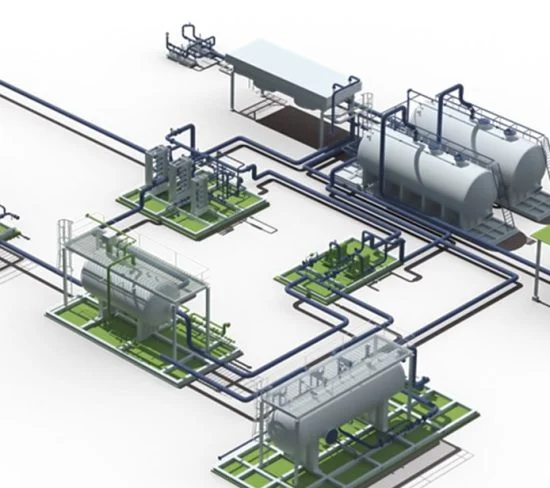
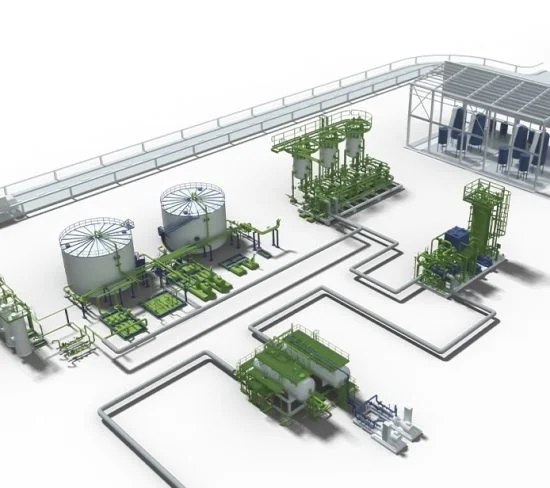
CECO Peerless offer includes an end-to-end solution for an integrated EPF package with following equipment:

  • Gas Treatment: Gas Compression, Gas Sweetening unit, Gas Dehydration unit, Dew Point Control unit, Gas Metering system
  • Oil Treatment: Three Phase Separators, Crude oil Heaters, Electrostatic Desalters/Heater Treaters, Crude Stabilization unit, Crude Storage, Metering and Pumping Units
  • Produced water: CPI Separators, Deoiler Hydro cyclones, Induced Gas Flotation (or DGF/DNF), Nutshell Filters
  • E&I Package: Integrated Control and Monitoring system (PLC) and ESD system
  • Structural Modules: Modularised skid for ease of transportation
  • Plant Utilities

FEATURES & BENEFITS

  • Fast track engineering attributed to standardization of packages
  • Modular design of process skids to lower transportation cost and benefit mobilization/ demobilization operations
  • Meets Customer Performance Guarantee
  • Overall low CAPEX and OPEX for customers
CECO Environmental

APPLICATIONS

  • Offshore – Mobile Offshore Production units (MOPU)
  • Onshore – upstream oil/ gas processing

Dual Media / Multimedia Filtration (MMF)

Dual Media / Multimedia Filtration (MMF)

Multimedia Filtration is a method of filtering sediments and particulates from water by applying pressurized feed water to push liquid through filtration media.

At a certain period of continuous filtration, suspended solids entrapped in the media accumulate, reducing the efficiency of filtration process and increasing the pressure drop. The pressure drop must be less than 1 bar to have an efficient filtration system. When the differential pressure exceeds the limit, backwashing will be required.

Backwashing is the process of reversing the flow of water through the filter media to remove th particulates trapped in the filter bed. During backwash, the Multimedia Filter bed expands, clearing suspended solids to flow out of the top of the vessel.

After backwash, the bed is settled for a few minutes and flushed with water as final rinse and then is back to service.

FEATURES & BENEFITS

  • Produce low turbidity in treated water
  • No chemical requirements
  • Low operating costs
  • Manual and Automatic Operation
  • Easy operation and maintenance
  • Supply customized design
  • Supply as part of integrated system to achieve the performance guarantee values
  • Fast track delivery
  • Retrofit for existing plants
  • Installation & supervision commissioning
  • Operation & maintenance
CECO Environmental

APPLICATIONS

Multimedia filters are employed to eliminate suspended solids and reduce the turbidity level of the water by entrapping impurities within the media. It contains a multilayer of media such as sand, anthracite granite, and gravel and is arranged according to its densities where the lighter density is placed on the top.

Multimedia Filtration (MMF) is commonly used for filtration process in the following applications:

  • Surface Water Filtration
  • Pre-treatment to RO System
  • Final Filtration for wastewater treatment system
  • Preparation of cooling water
  • Irrigation
  • Industrial water and wastewater treatment
  • Produced water treatment

Dissolved Gas Flotation

Dissolved Gas Flotation

Peerless Dissolved Gas Flotation units utilize a recirculation pump system to introduce micro-bubbles, enhancing the separation surface area improving the oil and solid separation performance. The Peerless DGF has a sophisticated pumping mechanism to generate micro-bubbles.

These pumps utilize dual sided impellers to draw in vapor and precisely mix it with the liquid. The vapor/ liquid mixture is sheared and compressed in the pump to enhance creation of micro-bubbles before this gas- enriched mixture is depressurized and discharged to the flotation chamber. The dense bubble formation lifts oils and solids to the liquid surface where they are ultimately skimmed off and discharged.

This configuration eliminates the need for a separate dissolution vessel as found on many traditional dissolved air flotation systems. Further simplification is realized as complicated back pressure and level control setups are no longer required.

Principle of Operation

In the Dissolved Gas flotation (DGF) process, the micro-size gas bubbles are generated by saturating a pressurized partial stream of treated water with gas and subsequently releasing this stream to atmospheric pressure. This is contrary to the traditional process of Induced Gas Flotation, whereby gas is drawn straight from the blanketing gas cap and is introduced into the raw water solely by mechanical means such as impellers, jet nozzles or venturi devices.

The Dissolved Gas Flotation process produces much finer bubbles than the traditional induced air flotation allowing for much higher separation efficiencies.

Oil is typically present in the form of a finely dispersed emulsion which creates a significant separation challenge. Employing a properly designed DGF system, along with chemical treatment, brings an effective systematic approach.

FEATURES & BENEFITS

  • Enhanced separation over traditional flotation systems down to 10 ppm concentration of free oil in water
  • High contaminant removal efficiency due to smaller bubble size of denser bubble population
  • Easy maintenance and minimum operation cost with the removal of the conventional pressurized dissolution vessel
  • Small footprint with compact structure
  • Reduced fuel gas consumption
CECO Environmental

APPLICATIONS

  • Offshore – Mobile Offshore Production units (MOPU), FPSO Topsides
  • Onshore – Oil and Gas Processing Facilities, Early Production Facilities (EPF)
  • Refineries & Petrochemical
  • Produced Water Reinjection

Dissolved Air Flotation

Dissolved Air Flotation

The Peerless Dissolved Air Flotation (DAF) typically uses a rectangular flotation tank where the flocculated water is mixed with small air bubbles. These air bubbles attach themselves to the flocs, thereby reducing the density of the impurities. The flocs then float rapidly to the free liquid surface in the flotation basin, together with the entrained air bubbles, to form a flotation froth-layer that is removed on a continuous basis by a surface flights-and-chains scraper.

The air bubbles are generated by dissolving air into a partial stream of the treated water. For this purpose, part of the DAF unit effluent water (depending upon the application, the amount of re-circulated water typically varies between 10 and 30%) is pumped into a pressurisation vessel. As the water flows through this vessel, the air supplied by a compressor will be dissolved into the recycled water. From the pressurisation vessel, the water flows towards the inlet compartment of the flotation tank. Just prior to entering the raw water inlet pipe, the pressure is released to atmospheric conditions. At that moment the air, until then in solution in the water, will come out of solution and forms very time air bubbles (in the range of 40–60 micron). These then attach themselves to the flocs, which rise to the water surface.

Principle of Operation

In the Dissolved Air flotation (DAF) process, the fine air bubbles are generated by saturating a pressurised partial stream of treated water with air (or gas) and subsequently releasing this stream to atmospheric pressure.

This is contrary to the process known as Induced Air Flotation, whereby air is drawn straight from the environment above the atmospheric liquid level and is introduced into the raw water solely by mechanical means such as impellers, air jet nozzles or venturi devices. The induced air floatation process generates much larger air bubbles (in range of 100 to 400 microns) that the DAF process and more suitable for applications with non-emulsified oil.

Dissolved Air Flotation

However, when, which is often the case, the oil is present in the water in the form of a very finely dispersed emulsion, it is the Dissolved Air Flotation Process, together with adequate chemical conditioning, that will provide the solution to the problem. During more than 40 years of experience in the treatment of oily water, Peerless has developed a tremendous knowledge in designing, engineering, and supplying the right DAF unit for each individual treatment problem.

Design And Configuration Options

Depending on the discharge requirements and pressure profile, Peerless can supply the dissolved air flotation units with the following design options:

  • Atmospheric Tank or Pressurized Vessel
  • Integrated coalescing plate pack, for high inlet oil concentrations
  • Stand-alone unit or fully skidded unit
  • Using microbubble-generating multi-phase
  • Using pump, compressor, and saturation vessel configuration
  • Using microbubble diffusing membranes

FEATURES & BENEFITS

  • High contaminant removal
  • Cost effective alternative to conventional sedimentation clarification processes
  • Capable of treating a wide range of suspended solids in water
CECO Environmental

APPLICATIONS

  • Wastewater Treatment
  • Desalination
  • Process Water Production
  • Drinking Water Intake
  • Offshore Produced Water
  • Onshore Produced Water
  • Pulp and Paper Plant

Desanding Hydrocyclones

Desanding Hydrocyclones

Desanding Hydrocyclones are pressure-driven cyclonic separators that utilize a certain pressure drop across the unit to force the separation of the solids from the bulk phase produced water or condensate. The feed stream, containing high amount of solids/ sand, enters the hydrocyclone through a tangential inlet under a pressurized condition. This is where it is forced into a spiral motion by the hydrocyclone’s internal profile. The internal conic shape of the liner causes the spinning/ swirling effect to accelerate {which effectively creates) high centrifugal forces, causing the denser solid particles to move to the outer wall of the hydrocyclone liner, while the lighter phase water or condensate is concentrated to the central core of the liner.

Solids continue to spiral down along the outer wall of the hydrocyclone to the bottom exit which is typically collected in an accumulator (could be integrated or a separate unit) for periodic disposal. The “desanded” water in the central core section reverses direction and is forced out through the central vortex towards the top of the Hydrocyclone.

Hydrocyclones are effectively centrifugal separators that rely on the differential density between the solids particle and the water to allow separation.

The efficiency of the separation is governed by four main factors:

  • Solid Particle Size
  • Differential Density
  • Viscosity of the Bulk Fluid
  • Gravity (or Centrifugal Force)

FEATURES & BENEFITS

  • Compact design, replacing substantially larger equipment.
  • No moving parts and minimal maintenance
  • Ideal for use where space is minimal
  • Cyclonic liners are available in a range of alloys from Stainless steel, Alumina Ceramic, Polypropylene, Tungsten Carbide, Reaction Bonded Silicon Carbide
CECO Environmental

APPLICATIONS

  • Wellhead solids removal in multi-phase flow
  • Protection of equipment from blockage or erosion
  • Sand cleaning for overboard discharge
  • Polishing of water prior to re-injection