Market: Oil & Gas

Pleated Polypropylene Filter Cartridges

Pleated Polypropylene Filter Cartridges

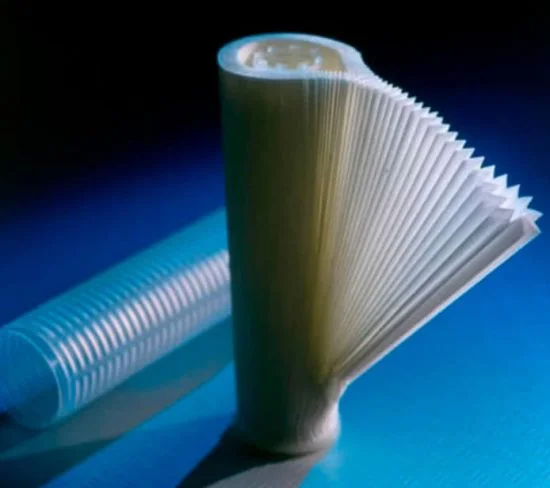
Our Sethco Pleated Polypropylene Filter Cartridges feature an extended filter surface for greater dirt holding capacity compared to conventional cylinder, sleeve, or wound type depth filter tubes.

Sethco offers the best pumps and filter cartridges for industrial applications. When dealing with corrosive and hazardous chemicals, industry experts count on Sethco products for reliability, safety, and efficiency. Sethco products are the industry standard.

As a global leader, Sethco manufactures products that have a superior reputation. For filtering any number of dangerous liquids, our filter cartridges have the job covered. Our Pleated Polypropylene Filter Cartridges provide greater holding capacity when compared to conventional filter tubes. That is one reason businesses worldwide trust their filter needs to Sethco.

Do not rely on inferior cartridges for cleaning hazardous chemicals or liquids. It is not worth the risk. Go with Sethco reusable cartridges and boost your profits. Our engineering experts are there to help you select the best product for your applications. Let Sethco become a valuable part of your business today.

FEATURES & BENEFITS

  • Available in 10″ and 20″ nominal lengths
  • 3- or 30-micron filtration
  • No finishing agent
  • Cartridges fit most single or multi-tiered chambers that use standard 10″ tubes
  • Resistant to acids and alkalis
  • No liquid by-pass
  • Ideal for water clarification
  • Operating temperature to 170°F (77°C).
  • Low Total Cost of Ownership
  • Maximum service life – reusable design
  • Optimal efficiency with greater particle holding capacity
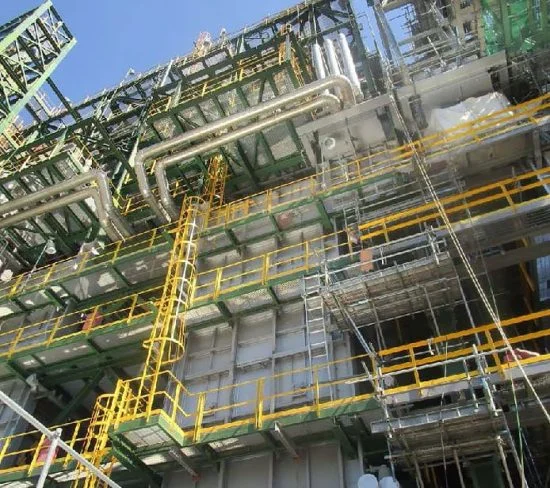
OLEFIN Flue Gas Management Systems

OLEFIN Flue Gas Management Systems

Olefin production is one of the highest energy consuming processes in the chemical industry. The core process for olefin production is steam cracking, which converts hydrocarbon feedstocks (naphtha, propane, ethane, etc.) to olefins (ethylene, propylene, etc.) and related products. The worldwide demand and production of olefins are one of the highest compared to other chemicals.

The flue gas management systems integrate a gas turbine within for example an ethylene plant. Process gasses which are partially flared off are used to fire a gas turbine instead. The benefits are independent electric power supply and/or gas compression.

The Integrated Flue Gas Management Systems consist of:

  • A gas Turbine sized for your system
  • A full system of control valves to assure safe and efficient operation
  • An air mixing system to ensure correct O2 levels for the burner system
  • A Bypass system for stand-alone Gas Turbine Operation
  • An emergency air intake system to accommodate stand-alone operation of the heater / process units

NOx Control Wet Scrubbers

NOx Control Wet Scrubbers

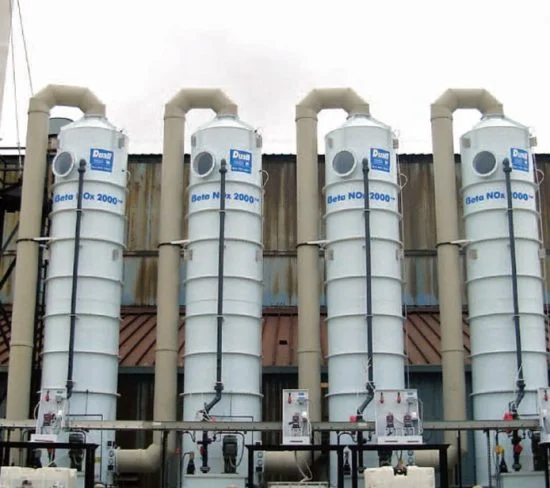
The HEE-Duall brand corrosion-resistant BetaNox® Control Wet Scrubbers provide a unique, high-efficiency wet oxidation/reduction approach to controlling nitrogen oxide (NOx) emissions. Single and multiple stage systems provide more than 99% efficiency on total NOx removal and elimination of the red/brown NOx exhaust plume.

The CECO HEE-Duall brand has been a global leader in the purification product industry for more than four decades. We create breakthrough technology that manages hazardous and volatile exhaust compounds in a wide range of industries. Our extensive selection of merchandise covers every component needed to deal cleansing corrosive airstreams, gases, mists, and vapors from exhaust streams. Our wet scrubbers perform beyond expectations in removing harmful substances from industrial exhaust that can damage both equipment and the environment. When you purify with HEE-Duall, you can be confident that your emissions are effectively and efficiently cleansed.

Along with extraordinary craftsmanship, HEE-Duall also offers custom solutions to meet your specifications, regardless of the project. Our products are built to excel in a variety of applications. Choose from our all-inclusive product line to put together the equipment that is right for you; we will assist you each step of the way. Our expert staff understands every aspect of purification processes, and our customer support team provides superior service. Choosing the right purification equipment for your company can be stressful. But when you choose HEE-Duall, the decision is easy. Choose the most advanced, most reliable, and most carefully crafted equipment in the industry.

FEATURES & BENEFITS

  • Professionally engineered stamped equipment designs
  • Low profile, space saving design
  • Low Total Cost of Ownership
  • More than 99% efficient on total NOx removal
  • Safe oxidation / reduction technology
  • Eliminates the red NOx plume
  • Minimal maintenance due to our homogenous thermoplastic construction for complete corrosion resistance

Noise Havens

Noise Havens

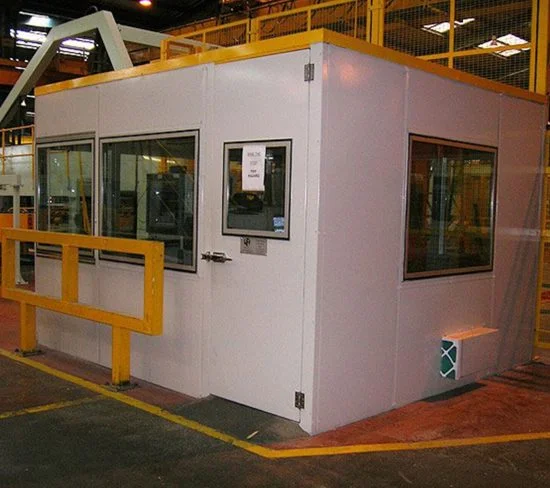
In certain circumstances, it is not always feasible to treat the noise at source, particularly in environments where there are multiple noise sources contributing to the overall exposure experienced by operators. In such cases, noise havens can be installed which are designed to offer respite for operators in noisy environments.

Wakefield Acoustics designs, manufactures and installs a wide range of noise havens, and works closely with OEM’s, end users, contractors and consultants to address complex noise problems across a wide range of industries. Each noise haven is cost-effectively designed to meet the most demanding of customer noise specifications.

Wakefield Acoustic offers several types of noise haven construction depending on application and structural requirements, from modular panel to panel constructions through fully framed factory-assembled fabrications for ease of installation on site.

FEATURES & BENEFITS

  • Single and double leaf, hinged and sliding doors for personnel access
  • Glazed viewing panels
  • Fan-assisted ventilation systems
  • Natural, free-flow, ventilation systems
  • Stand-alone air conditioning units
  • Internal lighting
  • VARIOUS FINISHES INCLUDING:
    • Polyester powder coated
    • Wet paint systems
    • Plastic coated steel

NOISE HAVENS FAQS

When it’s not practical to enclose noisy machinery or other noise sources, the next option is to create a respite space for the staff in noisy environments. These are called acoustic noise havens.

Natural Gas Dehydration Unit

Natural Gas Dehydration Unit

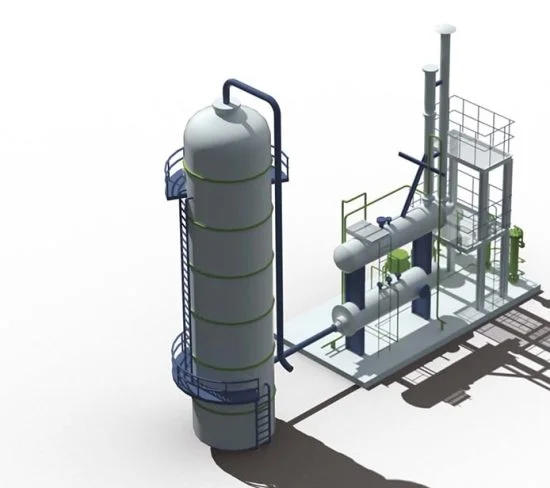
Gas Dehydration is a widely used application in Gas Processing Plants. This process is carried out to remove moisture from natural gas to achieve the required water dew point for pipeline specification or for downstream processing like NGL extraction.

This process is required to prevent hydrates formation at low temperatures and reduce corrosion problems due to the presence of carbon dioxide or hydrogen sulfide present in natural gas.

Based on the required outlet gas specification, the Gas Dehydration process is classified into the following processes:

  • Glycol Based Gas Dehydration Process
  • Molecular Sieve Gas Dehydration Process

Process Description

  1. Glycol Based Gas Dehydration Process:

Tri-Ethylene Glycol (TEG) is the most widely used chemical for Gas Dehydration Units (GDU). This process can achieve 3–7 lb/MMSCF of gas which is suitable for most Pipeline transportation specification. CAPEX and OPEX of this process is significantly lower than Molecular Sieve based Dehydration.

The wet gas from the well or compressor station is brought into contact with lean glycol in the Contactor column. The column is normally provided with structured packing which provides mass transfer surface.

Moisture present in the gas is absorbed in the lean glycol in a countercurrent absorption process resulting in reduction of water dew point. The rich glycol then flows from the absorber to TEG regeneration system in which the entrained gas and moisture is fractionated in a Column and Reboiler. The heating allows boiling off the absorbed water vapor. The lean glycol is cooled and pumped back into the absorber.

To achieve a higher degree of water removal from amine, fuel gas is used for stripping in the regenerator to achieve a higher glycol concentration.

2. Molecular Sieve Based Gas Dehydration Process:

To avoid any hydrate formation during cryogenic process like LPG or NGL recovery, Molecular Sieve based gas dehydration Process is employed.

The molecular sieve-based dehydration utilizes an adsorption process where moisture present in the gas is adsorbed on the surface of zeolite beds. The zeolite particles are available in various pore sizes (3–5 Å). Selection of media is critical for efficient operation of the system. CECO Peerless offers design with an optimized operation cycle resulting in extended life and higher efficiency.

In a standard process a two or three vessel design is used where one or two vessels is under drying cycle and the remaining vessel will be under regeneration mode. Rising Steam Switching Valves are used for switching from dehydration to regeneration mode.

A slip-up gas stream from the GDU outlet is compressed, superheated, and then introduced to the vessel which is in regeneration mode. The principle of heating the molecular sieve removes the adsorbed water and the regeneration gas flows back to inlet of the unit gas.

FEATURES & BENEFITS

  • Removes moisture from natural gas to achieve the required water dew point for pipeline specification or for downstream processing like NGL extraction.
  • Prevents hydrates formation at low temperatures and reduce corrosion problems due to the presence of carbon dioxide or hydrogen sulfide present in natural gas.
CECO Environmental

APPLICATIONS

  • Offshore – Process Platforms/FPSO/MOPU
  • Onshore – Gas Processing Plants/Refineries/ EPF

Multi-Cyclone Scrubber Centrifugal Separator

Multi-Cyclone Scrubber Centrifugal Separator

A centrifugal separator uses centrifugal, gravitational, and inertial forces to separate solutions, gas mixtures, or other matter that can be physically parted. Centrifugal separation occurs when a mixture in the machine’s chamber is spun very quickly, and heavy materials typically settle differently than lighter ones.

As a leader in the design and installation of high-quality and efficient separation and filtration equipment, CECO Peerless proudly delivers revolutionary equipment to oil and gas production, gas pipeline transportation, and power generating industries around the globe. For nearly 85 years, Peerless equipment has been crafted and re-crafted by our engineers to meet evolving industry demands.

From blueprint to installation, Peerless filtration technology is worry-free, providing the superior craftsmanship our customers expect. The Multi-Cyclone Scrubber Centrifugal Separator separates dust and liquid particles by spinning a mixture in the machine’s chamber allowing gravity to deposit light and heavy materials from each other. Peerless products and solutions include separation technologies, gas transmission, oil treatment, unconventional oil recovery, gas treatment, produced water and oil- water treatment, sand management, and nuclear power separators.

When it comes to filtration, Peerless equipment can protect your bottom line. A filtration system that fails will leave you with higher operating costs due to contaminated product and increased downtime. Trusting Peerless for all your filtration and separation needs keeps production going. Trust the brand that has been creating and installing high-quality equipment for decades. Trust Peerless. We live up to our name.

FEATURES & BENEFITS

  • Wide range of flows
  • Intermittent flow spikes capacity
  • Constructed to resist years of abrasive wear and tear
  • Rugged enough to withstand a wide variety of gas stream applications
  • Critical parts of the Cyclone tubes may be constructed of erosion-resistant steel alloys
  • Built to ASME Code and international standards
  • Low Total Cost of Ownership
  • High-efficiency liquid and solid removal
  • Guaranteed performance
  • Maintenance free
CECO Environmental

APPLICATIONS

The CECO Peerless brand’s Multi-Cyclone Scrubber Centrifugal Separator is used for applications that require efficient dust and liquid removal:

  • Fertilizer production
  • Natural gas compression
  • Refineries
  • Power
  • Industrial steam
  • Industrial gas compression
  • Air separation
  • Petrochemical
  • Chemical Production (e.g., Methanol)
  • Liquefied Natural Gas (LNG) production
  • Plastic production

Moving Bed Bio-Reactor

Moving Bed Bio-Reactor

The moving bed bio-reactor (MBBR) process introduced by the late 1980s, is a biological membrane process that uses an activated sludge process but is enhanced by floating bio-carriers where biofilm can grow. MBBR is widely used for municipal and industrial wastewater treatment.

FEATURES & BENEFITS

  • Compact and requires a small footprint compared to conventional bio-process
  • Maintenance friendly
  • Robust & durable technology
  • This process is used for the removal of organic substances, nitrification and denitrification
  • High volume load, which leads to stability against biological load / flow fluctuation
CECO Environmental

APPLICATIONS

  • Petrochemical, oil and gas process industrial wastewater – high levels of suspended solids, COD and BOD5
  • Industrial wastewater from various industries, pharmaceutical, textile, chemical, food & beverage, etc. – high levels of suspended solids, COD and BOD5
  • Sewage and municipal water treatment – suspended solids, COD and BOD5

Mercury Removal Unit

Mercury Removal Unit

Mercury (Hg) exists naturally in oil and gas reservoirs and in gas streams in element or as compound form. The presence of mercury may not be tolerated in certain types of process equipment. Mercury causes severe hazardous corrosion (liquid-metal embrittlement) of aluminum heat exchangers in cryogenic plants, pipes, fittings, and control valves containing non-ferrous metals by amalgam formation. Also, mercury is toxic can easily dissolve in aqueous streams or produced water streams and poison catalysts at the downstream equipment.

Process Description

Mercury removal is a three-stage process. The first stage comprises of natural gas flowing into the inlet gas coalescer for bulk removal of liquid followed by fine removal of liquid in the coalescing section. Liquid droplets of sizes more than 0.3µm are removed to ensure dry gas flows into the mercury removal bed. This is vital for the long life of the bed media.

In the second stage, this liquid-free gas flows into the mercury removal unit, where the elemental mercury is absorbed by proprietary media absorbent (mixed metal sulfides). In the third stage the mercury-free gas is taken to an After Filter to remove any solid dust carried over from the mercury removal bed unit.

CECO Peerless Offer:

  • Absolute Separator with High Performance Internals for 99.99% removal of liquid droplets of sizes > 0.3 µm
  • Mercury Removal unit
  • Post-Bed Dust Filters with long design life and efficiency to remove 100% of particles up to 3 micron
  • Optional offer for complete package including Piping, E&I and Structural skid

FEATURES & BENEFITS

  • Compact and high efficiency design for Mercury removal
  • Designed to handle wide range of process conditions
  • Extended life of bed due to absolute pre-separation
  • Reduced CAPEX and OPEX for customers
CECO Environmental

APPLICATIONS

  • Offshore – Process Platforms/Wellheads/ FPSOs
  • Onshore – Oil and Gas processing facilities, EPF

Membrane Bio-Reactor

Membrane Bio-Reactor

The MBR process, introduced in the late 1960s, is a biological membrane process that uses an activated sludge process combined with a membrane separation process and is now widely used for municipal and industrial wastewater treatment, especially when wastewater recycling/reuse is taking place.

An MBR process is mainly used for wastewater treatment by using membranes (flat sheet/submerged or tubular/pressurized) and integrating them with a biological process like a suspended growth bioreactor. The membranes are mainly utilized for filtration and removal of solids, which are generated during the biological process, which will result in a clear product.

FEATURES & BENEFITS

  • Compact design, replacing substantially larger equipment.
  • No moving parts and minimal maintenance
  • Ideal for use where space is minimal
  • Cyclonic liners are available in a range of alloys from stainless steel, alumina ceramic, polypropylene, tungsten carbide, reaction bonded silicon carbide
CECO Environmental

APPLICATIONS

  • Petrochemical, oil and gas process industrial wastewater—high levels of suspended solids, COD and BOD5
  • Industrial wastewater from various industries, pharmaceutical, textile, chemical, food and beverage,etc. – high levels of suspended solids, COD and BOD5
  • Landfill leachate—a wide variety of dissolved and suspended organic and inorganic compounds.
  • Sewage and municipal water treatment – suspended solids, COD and BOD5

Liquid-Liquid Coalescer

Liquid-Liquid Coalescer

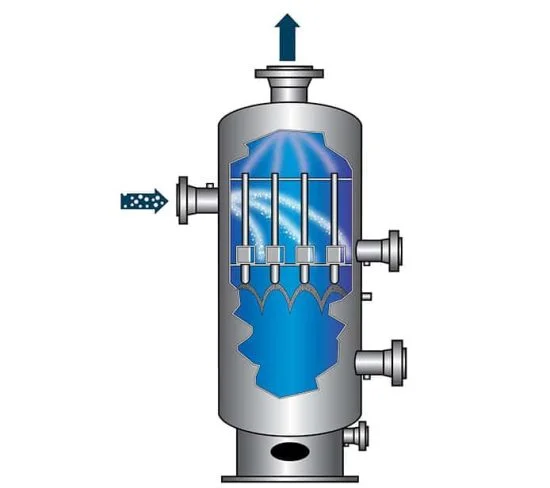
The Peerless Liquid-Liquid Coalescer is a single stage device, which flows inside to out as the first stage and outside to in through the second stage, through a high surface area pleated medium.

The aqueous (continuous) phase enters the coalescing element and flows inside-to-outside.

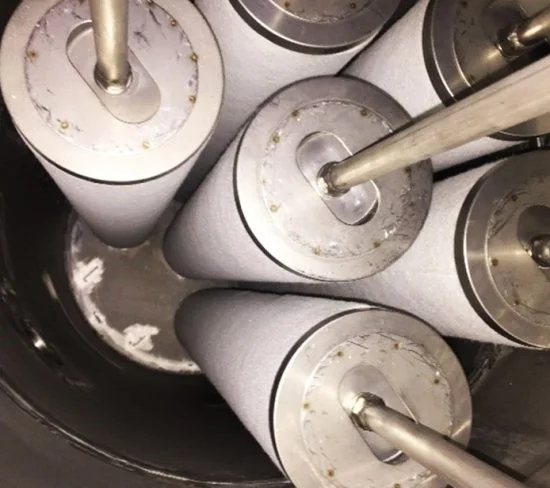
The coalescing elements are made of Borosilicate Glass media comprising inorganic microfibers supported by polymeric supports in a spatially locked pore configuration with advanced separator layers to maximize droplet formation and disengagement. Small liquid droplets suspended in the continuous phase come together, or coalesce, as the mixture moves through the coalescer medium.

Contaminant-free liquid and large droplets of the dispersed phase flow toward the Separator Cartridges located next to the coalescer stage. Separator elements are made of Silicone-based media comprising organic microfibers in a spatially locked pore configuration to maximize water rejection.

The flow direction is outside to inside the coalescing element. The separator medium is hydrophobic preventing the aqueous/continuous phase from entering the separator. Only the non-aqueous continuous phase fluid flows through the separator. The two liquids are removed by separate drain connections.

Process Description

The basic principle comprises droplet capture and growth, and once the aqueous droplets are sufficiently large, they can be effectively rejected by a hydrophobic medium. The two-stage separator essentially skews conventional settling calculations by using advanced media technology to grow and separate the emulsified droplets.

Our Services:

  • Supply of only Internals/Vessel plus Internals/Modular Skid Package
  • Custom Built/Standard Design
  • Fast Track Delivery
  • Troubleshooting & Optimization of Units
  • After Sales Service

FEATURES & BENEFITS

Technology Advantage:

  • Meets stringent performance guarantee requirement
  • Longer design life of cartridges
  • Compact footprint
CECO Environmental

APPLICATIONS

  • Diesel Coalescing
  • NGL/Condensate Coalescing
  • Gasoline Coalescing
  • Produced Water Treatment