Brand: Peerless Water

Wastewater Headworks Treatment

Wastewater Headworks Treatment

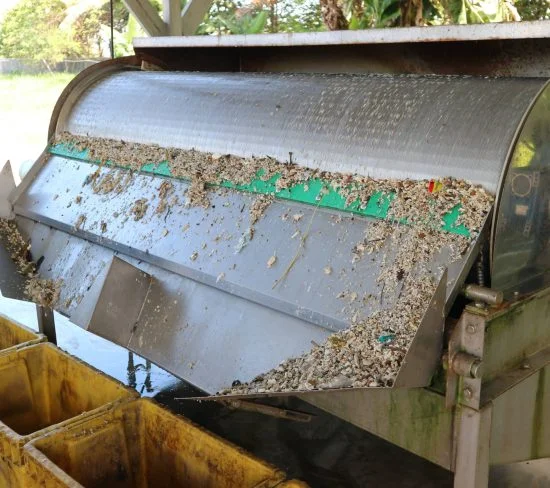
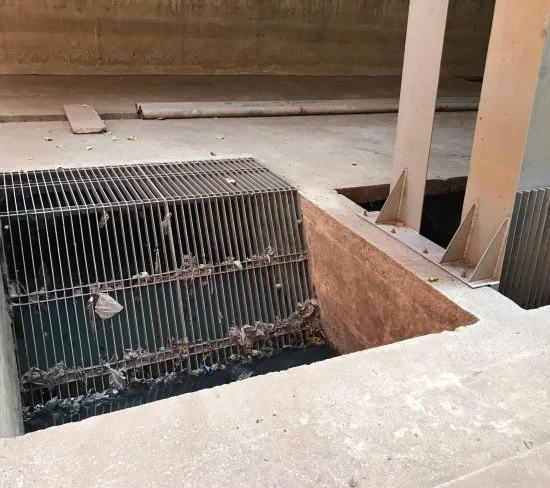
The headworks treatment reduces the level of pollutants in the incoming domestic and industrial wastewater to a level suitable for further treatment to ensure that the complex treatment of physical, chemical, and biological processes work effectively and efficiently.

The headworks treatment includes screening, oil removal, clarifications, other chemicals, and physical processes that help the influent wastewater to be suitable for further treatment and protect the downstream treatment from abrasion and clogging. The following systems are widely used:

  • Primary treatment – wastewater screens
  • Coarse screening and grinding
  • Bar screening
  • Fine headworks screens
  • Washing and compacting
  • Combined grease, oil, sand & grit removal

The Dementalization process is a cyclic process, thus, regeneration using acid & caustic soda is required at a specific frequency based on the ionic load, ion exchange quantity and flow rate. The standard system consists of Pretreatment to ensure feed water TSS is less than < 5 ppm, with a wide range of feed water conductivity up to 1,000 μm, two mono beds (SAC & SBA) followed by a mixed bed. Based on the feed water quality, a degasifier might be considered between the mono bids to reduce carbon dioxide load.

FEATURES & BENEFITS

  • Protect equipment from large objects at the headworks
  • Cost-effective alternative to traditional technologies
  • Fine Screening primary treatment strategies safeguard sensitive equipment like MBRs
  • Screening, Washing & Compacting separate fecal materials from inorganics and produce a clean, dry and compacted product of screenings
  • Reduce sludge handling
CECO Environmental

APPLICATIONS

  • Screening industrial wastewater containing high level of oil, suspended solids, ammonia
  • Fine Screening primary treatment strategies safeguard sensitive equipment like MBRs
  • Screening, Washing & Compacting separate fecal materials from inorganics and produce a clean, dry, and compacted product of screenings

UV Disinfection

UV Disinfection

UV Disinfection is a physical treatment technology and a chemical-free process of purifying water. It is extensively used as an effective treatment to eliminate or inactivate viruses and bacterial contaminants in water. UV disinfection occurs when the water is exposed to UV light which alters the microorganism’s DNA and inactivates its cells to reproduce.

FEATURES & BENEFITS

  • More effective disinfection with shorter contact time than the chemical disinfection dosing system
  • Compact design with minimal footprint
  • No chemical requirements
  • Easy operation with less human interference
  • Modular design, easy to expand and maintain
CECO Environmental

APPLICATIONS

  • Drinking water
  • Swimming pools
  • Pharmaceutical
  • Food and beverage industry
  • Wastewater treatment

Ultrafiltration

Ultrafiltration

Microfiltration is a type of physical filtration process where a contaminated fluid is passed through a special pore-sized membrane or element to remove suspended particles from process liquid, the particles removed depend on the cartridge filter type, micron rate & material of construction.

FEATURES & BENEFITS

  • High removal rate and filtration accuracy
  • Stable effluent water quality to <0.1 NTU turbidity
  • Compact and Modular design
  • Automatic operation
  • Low operating pressure required
CECO Environmental

APPLICATIONS

  • Pre-treatment to RO system
  • Drinking water
  • Dairy, food & beverage industries
  • Industrial and municipal water
  • Food & beverage industry
  • Pharmaceutical and medical applications
  • Electronics industry
  • Wastewater treatment and recycling
  • Seawater desalination

Special Media Filtration

Special Media Filtration

Special Media Filters are designed to reduce the contaminant concentrations in water to an acceptable level. Contaminants like Iron, Manganese, or H2S and heavy metals are oxidized and converted into an insoluble form and then filtered by the special media. Different media types are used depending on what kind of contaminants are removed.

FEATURES & BENEFITS

  • Effective removal of wide range of pollutants
  • Manual and automatic operation
  • Simple operation and maintenance
  • Low operating costs
CECO Environmental

APPLICATIONS

  • Mining Industries water treatment
  • Industrial wastewater treatment
  • Manufacturing wastewater
  • Surface water and groundwater treatment
  • Process water treatment
  • Commercial & municipal water treatment

Reverse Osmosis Treatment

Reverse Osmosis Treatment

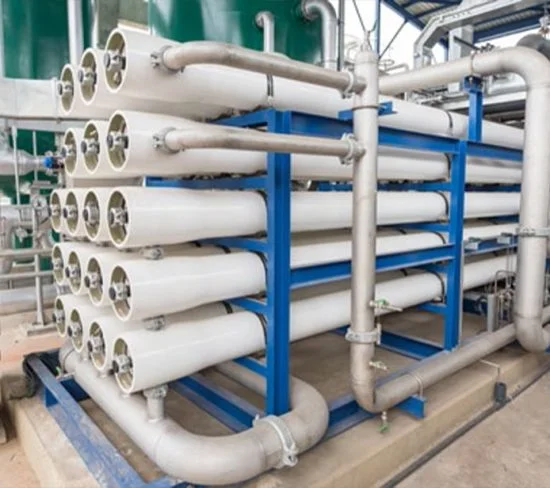
In the reverse osmosis membrane, the natural osmosis effect must be reversed; this can be achieved by overcoming the osmotic pressure. To force the feed water to flow towards the permeate water stream, the feed water must be pressurized at an operating pressure more significant than the osmotic pressure. As a result, the feed water is separated into two streams, permeate water (Low Salinity) and Brine Stream (High Salinity).

The System is mainly consisting of pretreatment, chemical dosing stations, membrane modules and a high-pressure pump. Membrane working pressure depends on the feed water quality and can reach 60 bar in the case of seawater.

FEATURES & BENEFITS

  • Due to the spiral wound membrane, the system becomes very compact and require minimal footprint
  • Salt rejection can reach 99.7%
  • Can be delivered in containers
  • RO is standardized equipment for standard requirements, customized packages also available to meet performance guarantees and specification
  • Modular design, easy to expand and maintain
  • Produces safe potable water according to WHO
CECO Environmental

APPLICATIONS

  • Nano Membrane: widely used for water softening for potable and process applications
  • Reverse Osmosis Membrane: used for brackish and seawater desalination for potable and process applications
  • Sulphate Removal Membrane: used for sulfate removal from seawater for injection water applications
  • Reverse Osmosis Membrane: used as tertiary treatment for wastewater recycling for process (boiler, cooling) water applications

Remineralization

Remineralization

The remineralization process can be achieved by adding diluted calcium hydroxide. The prepared solution is filtered through a cartridge filter to ensure a clean solution free of calcium carbonate and other insoluble impurities before getting mixed with potable water. The filtered solution will be mixed with potable water according to predetermined quantity using a dosing pump or a standard centrifugal pump depending on the flow rate.

FEATURES & BENEFITS

  • Reduce pipe network corrosion due to alkalized pH
  • Balance the potable water pH value will improve the human body’s immune system
  • Improve potable water taste

Ozone Disinfection

Ozone Disinfection

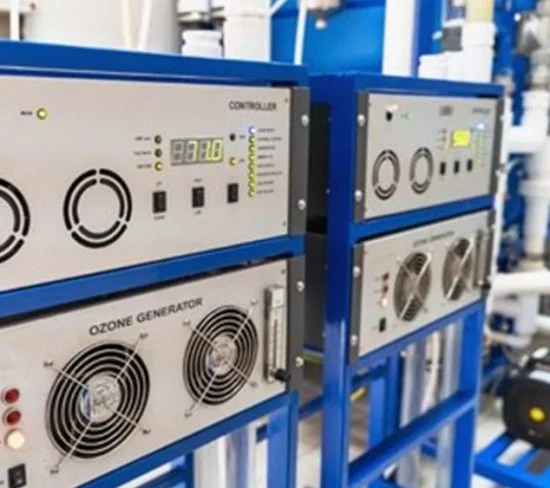
High ozone concentrations are produced by exposing air or oxygen to a controlled, high-voltage discharge at a set frequency. Water treatment plants then use this ozone to treat wastewater. After generating ozone gas, it is pumped into chambers to mix with water since ozone is an unstable gas that can destroy microorganisms cells. Ozone (O3) in water release the weaker oxygen molecule, penetrate the cell, and destroy the cell components (enzymes, proteins, DNA).

FEATURES & BENEFITS

  • Powerful oxidation agent leads to very effective disinfection with a shorter contact time than chemical disinfection dosing system
  • Compact design with minimal footprint
  • No chemical requirements
  • Easy operation with less human interference
  • More stable & provide higher residual time
CECO Environmental

APPLICATIONS

  • Drinking water
  • Pharmaceutical
  • Food and beverage industry
  • Wastewater treatment

Moving Bed Bio-Reactor

Moving Bed Bio-Reactor

The moving bed bio-reactor (MBBR) process introduced by the late 1980s, is a biological membrane process that uses an activated sludge process but is enhanced by floating bio-carriers where biofilm can grow. MBBR is widely used for municipal and industrial wastewater treatment.

FEATURES & BENEFITS

  • Compact and requires a small footprint compared to conventional bio-process
  • Maintenance friendly
  • Robust & durable technology
  • This process is used for the removal of organic substances, nitrification and denitrification
  • High volume load, which leads to stability against biological load / flow fluctuation
CECO Environmental

APPLICATIONS

  • Petrochemical, oil and gas process industrial wastewater – high levels of suspended solids, COD and BOD5
  • Industrial wastewater from various industries, pharmaceutical, textile, chemical, food & beverage, etc. – high levels of suspended solids, COD and BOD5
  • Sewage and municipal water treatment – suspended solids, COD and BOD5

Membrane Bio-Reactor

Membrane Bio-Reactor

The MBR process, introduced in the late 1960s, is a biological membrane process that uses an activated sludge process combined with a membrane separation process and is now widely used for municipal and industrial wastewater treatment, especially when wastewater recycling/reuse is taking place.

An MBR process is mainly used for wastewater treatment by using membranes (flat sheet/submerged or tubular/pressurized) and integrating them with a biological process like a suspended growth bioreactor. The membranes are mainly utilized for filtration and removal of solids, which are generated during the biological process, which will result in a clear product.

FEATURES & BENEFITS

  • Compact design, replacing substantially larger equipment.
  • No moving parts and minimal maintenance
  • Ideal for use where space is minimal
  • Cyclonic liners are available in a range of alloys from stainless steel, alumina ceramic, polypropylene, tungsten carbide, reaction bonded silicon carbide
CECO Environmental

APPLICATIONS

  • Petrochemical, oil and gas process industrial wastewater—high levels of suspended solids, COD and BOD5
  • Industrial wastewater from various industries, pharmaceutical, textile, chemical, food and beverage,etc. – high levels of suspended solids, COD and BOD5
  • Landfill leachate—a wide variety of dissolved and suspended organic and inorganic compounds.
  • Sewage and municipal water treatment – suspended solids, COD and BOD5

Dual And Multimedia Filtration

Dual And Multimedia Filtration

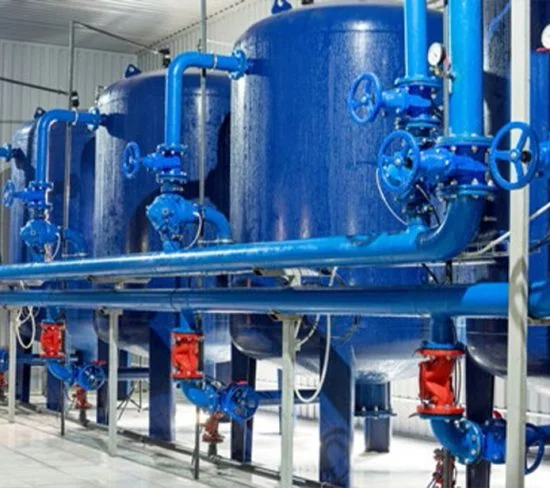
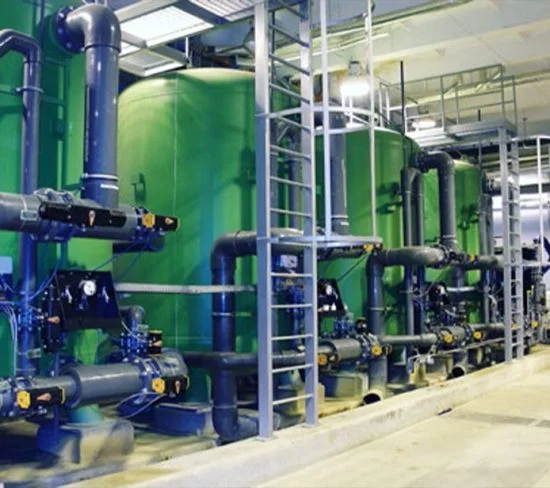
Filtration is a method of filtering sediments and particulates from water by applying pressurized feed water to push liquid through filtration media. At a certain period of continuous filtration, suspended solids entrapped in the media accumulate, reducing the efficiency of the filtration process and increasing the pressure drop. The pressure drop must be less than 1 bar to have an efficient filtration system. When the differential pressure exceeds the limit, it will require backwashing. Backwashing reverses the flow of water through the filter media to remove the particulates trapped in the filter bed. During backwash, the Multimedia Filter bed expands, clearing suspended solids to flow out of the top of the vessel. After backwash, the bed is settled for a few minutes and flushed with water as a final rinse, and then it is back to service

FEATURES & BENEFITS

  • Produce low turbidity in treated water
  • No chemical requirements
  • Low operating costs
  • Manual and automatic operation
  • Easy operation and maintenance
CECO Environmental

APPLICATIONS

  • Surface water filtration
  • Pre-treatment to RO System
  • Final filtration for wastewater treatment system
  • Preparation of cooling water
  • Irrigation
  • Industrial water and wastewater treatment
  • Produced water treatment